HomeNavigation arrowBlogNavigation arrow
Current page
Photography Tips

The Hidden Cost of Shipping in Volume Photography

The Hidden Cost of Shipping in Volume Photography

by Jack Counts III - NowCandid Project Manager

‍

A photography business recently switched to NowCandid from another volume photography platform...

‍

During the transition, they shared some details about how their previous software handled shipping and fees.

‍

I knew different platforms approached this stuff differently. But seeing the mechanics laid out was one of those "wait… what?" moments.

‍

In the setup they described, the photographer didn’t set the shipping charge. They didn’t keep that shipping money. But the amount charged for shipping still increased the percentage-based fees coming out of their payout.

‍

Which is honestly kind of wild to me.

‍

Let me break down why:

  1. The shipping & handling amount could be set outside the photographer's control.
  2. The photographer would not generate any additional revenue on this shipping charge, which may be marked up.
  3. The photographer would pay ecommerce, payment processing, and potentially sales tax on the collected shipping.

‍

That can add up to some significant % in additional costs that photographers might not otherwise notice.

‍

Hearing about this hard-to-notice cost got me thinking about shipping in the volume photography space.

‍

What does that shipping charge actually cost the photographer?

‍

Some volume photography platforms use lab-set shipping rates for orders delivered directly to customers. GotPhoto’s documentation (help.gotphoto.com/en/support), for example, says its direct-shipping charges are determined by the lab and automatically added at checkout.

‍

Then there’s a separate question: Does that shipping charge also increase the fees coming out of the photographer’s payout?

‍

PhotoDay’s published standard pricing (support.photoday.io/en/articles) applies its 10% ecommerce fee to the total order, including products, shipping, and tax. Its reporting guide (support.photoday.io/en/articles) says customer-paid shipping goes directly to the lab.

‍

Let’s use a hypothetical order as an example with $50 in photo products plus $10 shipping. The customer pays $60 before tax.

‍

A 10% ecommerce fee on the $50 in products would be $5. But because that fee also applies to shipping, the photographer pays $6 in total ecommerce fees instead of $5 (before accounting for any additional ecommerce fees on collected sales tax).

‍

That extra dollar might not sound like much. But it means the ecommerce fee consumes 12% of the photographer’s product sales, even though the photographer doesn’t keep any shipping revenue.

‍

That’s an additional two percentage points of product revenue going toward ecommerce fees because of shipping.

‍

Here’s how that changes across a $5–$20 shipping range:

‍

How shipping affects ecommerce fees on $50 in product sales
Customer's shipping charge 10% ecommerce fee on shipping alone Total ecommerce fee on products + shipping Effective fee as a share of $50 in product sales
$5 $0.50 $5.50 11%
$10 $1.00 $6.00 12%
$15 $1.50 $6.50 13%
$20 $2.00 $7.00 14%

Illustrative calculations assume $50 in product sales and a 10% ecommerce fee applied to products plus shipping. They exclude payment processing, sales tax, and fulfillment costs.

‍

Payment processing adds another layer. Under PhotoDay’s published 2.9% processing rate, that $10 shipping charge generates another $0.29 in fees. Combined with the $1 ecommerce fee, that’s $1.29 attributable to shipping alone, equivalent to 2.58% of the $50 in product sales. The fixed $0.30 transaction fee is separate; it isn’t an additional charge caused by shipping, so we don't need to include that in this math we're doing to determine additional cost.

‍

Across 1,000 orders like this, that adds up to $1,000 in ecommerce fees plus $290 in processing fees attributable to shipping.

‍

To be clear, charging processing on shipping isn’t the problem by itself. I understand why processing a larger payment costs more, and I’m not assuming shipping revenue is all profit for the lab, since packaging, handling, and postage need to be covered. The problem is that it’s one more fee applied to a number the photographer doesn’t control. The lab or platform sets the shipping charge, and if that charge runs high, the photographer still pays a percentage on every dollar of it.

‍

But an ecommerce commission on shipping money the photographer doesn’t benefit from or have a significant say in? That does not sit right with me.

‍

To be fair, PhotoDay does let photographers offer free economy shipping as a promo (support.photoday.io/en/articles), and its reporting guide (support.photoday.io/en/articles) says that when you do, the shipping cost is deducted from your payout. That takes the charge off the customer’s plate, but the photographer still isn’t the one setting it. The amount comes from the lab’s shipping rates on the price sheet, and those may be customer-facing rates with markup built in, not what it actually costs to get the package out the door.

‍

High shipping costs can put the whole order at risk

‍

The photography business I talked with also shared with me how costs related to expensive-to-ship items were entirely passed on to end customers during checkout.

‍

Say someone picks out a $70 product, then discovers shipping adds another $20. Their purchase just became almost 29% more expensive, before tax.

‍

Maybe they’re fine with that. Or maybe that’s the moment they close the tab.

‍

Baymard Institute’s checkout research (baymard.com/lists/cart-abandonment) lists high extra costs, including shipping, taxes, and fees, as the top reason shoppers give for abandoning checkout, cited by 40% of respondents. That’s general ecommerce research, not a photography-specific rate, but it’s a pretty compelling reason to pay attention to the shipping line.

‍

And the actual fulfillment expense doesn’t necessarily have to appear entirely in that line.

‍

Consider two hypothetical ways to price the same purchase:

‍

Same $90 total, different shipping prices
Price breakdown Higher shipping Lower shipping
Product price $70 $85
Shipping $20 $5
Total before tax $90 $90

Hypothetical pricing example. Both options total $90 before tax; the difference is how the price is divided between the product and shipping.

‍

Same total. Different presentation.

‍

There’s research suggesting that distinction matters. A 2026 study in PLOS ONE (journals.plos.org/plosone) found a preference for free shipping even when the total purchase price stayed constant. It was a small study, but it gives us a reasonable question to test: Would customers respond better if more of the fulfillment cost were included in the product price and less appeared as shipping?

‍

We’ve recently seen abandoned carts come in at about 3% of the orders placed. In other words, for every 100 orders, only about 3 shoppers added something to their cart and never checked out, so we seem to be doing something right. 😎

‍

How NowCandid gives photographers more control

‍

With NowCandid, photographers can set their customer-facing shipping prices (nowcandid.com/blogs), rather than simply passing through a lab-set charge. They can also price shipping above the underlying cost to create additional margin.

‍

But having the opportunity to profit from shipping doesn’t mean you should always charge more for it.

‍

You can keep shipping very inexpensive and account for more of the fulfillment expense in your product pricing instead. That’s especially useful when you’d rather not put a large delivery charge in front of someone buying a more expensive item.

‍

We also don’t calculate our ecommerce or payment-processing percentages on collected sales tax (nowcandid.com/blogs). Collecting tax and charging additional fees on those tax dollars are two separate things.

‍

It’s about more than cheaper shipping

‍

Looking back at that conversation, the part that bothered me wasn’t simply the shipping price. It was how little control the photographer had over a charge that affected both their profit and their customer’s experience.

‍

On one side, shipping can increase the fees coming out of your payout. On the other, it can make a purchase feel more expensive at the exact moment someone is deciding whether to complete it.

‍

That deserves more consideration than “that’s just what the lab charges.”

‍

And addressing it doesn’t necessarily mean giving up margin. In our $90 example, we didn’t lower the customer’s total, we moved more of the price into the product and less into shipping. Whether that presentation works better for your customers is worth testing, but you need the flexibility to try it first.

‍

That’s what I’d encourage photographers to look at when comparing volume photography software: Who sets the shipping price? Who receives that money? What additional fees does it generate? And can you change it when it isn’t working for your business?

‍

The advertised ecommerce % fee only tells part of that story.

‍

I don’t think every photographer needs the same shipping strategy. Some may want a reasonable margin on shipping. Others may prefer a higher product price and a very low shipping charge. That flexibility is what we want to provide with NowCandid.

‍

Shipping is part of your pricing. You should get a say in it.

‍

Thank you for attending my TED talk 🙏

Jack Counts III

NowCandid Project Manager

‍

NOTE: Platform examples reflect published policies and standard rates reviewed September 25, 2026. Terms can vary by lab, plan, promotion, or agreement. Order examples are illustrative, not reported studio results.

Related articles

Weekly Recap: Faster Face Matching, Virtual Group Tweaks & Reporting Upgrades ⚡📸
Feature Updates
May 29, 2026

Weekly Recap: Faster Face Matching, Virtual Group Tweaks & Reporting Upgrades ⚡📸

3
 minutes read
Hey photo friends! 👋

‍
This week’s update is all about keeping up with the busiest season yet. We saw an enormous wave of images come through recently — more than ever — and Face Matching delays got much longer than we want them to be.

‍

So, we’ve been making improvements accordingly. 💪

‍

⚡ Face Matching Speed Improvements

‍

🚀 Face Matching performance upgrades are in progress! We’re implementing changes that should help speed up Face Matching by up to 10× faster in some cases.

‍

These improvements are especially important during high-volume stretches like graduation season, when thousands upon thousands of images are coming in at once. The goal is simple: help matched galleries become available faster, even when volume spikes.

‍

📊 Reporting Upgrades

‍

📈 Sales Report now supports up to 15,000 orders‍

  • The Sales Report list and Excel download can now include up to 15k orders at once. Previously, the limit was 1k.

‍

💵 Sales Report download now includes eFee and COGs‍

  • The Excel export now includes eFee and COGs for each order, giving you more detailed financial visibility.

‍

📦 Products Report sorting fixed‍

  • Column sorting now works correctly on the Products Report.

‍

🏷️ Event Tags report filter fixed‍

  • Fixed an issue where the Event Tags filter could set the end date based on the newest Event end date instead of today, potentially missing newer report data.

‍

🧑‍🤝‍🧑 Virtual Group Builder Improvements

‍

📝 New Text Vertical Position slider‍

  • You can now adjust the vertical position of subject names in Virtual Group Builder.

‍

🎯 Logo positioning fix‍

  • Fixed logos being off by a few pixels in Virtual Group Builder.

‍

🧭 Edit redirect fix‍

  • Fixed an issue where editing a Virtual Group could sometimes send you back to Home.

‍

🖼️ Dashboard Image Management Updates

‍

🔢 Manage Images now shows total image count‍

  • At the top of the Manage Images page, you’ll now see how many images are included in your current search/filter results.

‍

🏷️ PhotoTag duplicate prevention improved‍

  • PhotoTag creation now better prevents duplicates caused by extra empty space at the end of the PhotoTag name.

‍

🛍️ Retail Improvements

‍

🧑‍🤝‍🧑 PhotoTag group images appear first‍

  • When a participant is associated with a PhotoTag, group images tied to that same PhotoTag will now appear before general group images with no PhotoTag.

‍

⬇️ Receipt download button cleanup‍

  • The Download All Images button is now hidden if the order does not include any downloads to reduce confusion.

‍

⏳ Web Receipt Download Page processing message fixed‍

  • If a customer clicks the receipt download link before the order is fully loaded by the lab, the page will correctly say the order is still processing.

‍

✂️ Z-crop product cropping improved‍

  • When cropping a z-cropped image during product configuration, retail now uses the z-cropped version directly instead of jumping back to the full original image.

‍

🖼️ “Matte” clarified to “Standard”‍

  • Most products now use "Standard" instead of "Matte" for clearer wording. Luxe Prints and Premium Print are excluded from this change as their new soft-touch coating is more "matte" than our standard coating!

‍

That’s the week!

‍

Faster Face Matching is the big focus right now, and these reporting, Virtual Group, Dashboard, and retail updates should help keep things clearer and more manageable going forward for photographers as well!

‍

Keep creating magic,

Candy 🍬

Deliver Faster and Start Selling Sooner
Feature Updates
May 26, 2026

Deliver Faster and Start Selling Sooner

7
 minutes read

Why timing is the most overlooked “marketing strategy” in event photography

In photography, timing matters.

Not just because clients want their photos quickly—but because buying behavior is emotional and time-sensitive. The longer customers wait to see their images, the more the energy fades. The excitement from the event turns into “I’ll get to it later,” and “later” often becomes “never.”

That’s why one of the biggest marketing advantages you can build into your business isn’t a fancy email template or a new ad campaign. It’s this:

Deliver faster—so you can start selling sooner.

NowCandid™ is built around that idea.

‍

The real problem: attention decays fast

After an event, people are at peak interest:

  • •They’re excited.
  • •They’re already talking about it.
  • •They’re texting friends.
  • •They’re posting.
  • •They’re still in “memory mode.”

That’s the moment when they’re most likely to open a message, click a gallery link, and buy.

But when delivery drags out:

  • •They stop checking.
  • •They forget.
  • •They move on.
  • •They’re less likely to convert.

Even a delay of a couple days can change the outcome.

‍

The NowCandid approach: proactive delivery, not passive browsing

A lot of platforms rely on customers to work hard to find their photos. The experience is often:

“Here’s a link. Good luck.”

NowCandid is designed to flip that.

Instead of waiting for customers to dig through a massive gallery, the platform is built to connect the right photos to the right people quickly, and then help you reach them while the moment still feels immediate.

Here’s what that looks like.

‍

The “faster = more sales” workflow

1) Customers complete a quick Selfie Check-In™

Selfie Check-In gives customers a simple way to identify themselves and provide contact info, so your system has what it needs to deliver their images efficiently—without a bunch of manual work on your end.

The key benefit: less friction.
You’re not chasing names after the fact. They’re raising their hand while the event energy is still high.

2) Images can be live-uploaded as they are shot

When you can upload while you shoot, you change the entire sales timeline.

Instead of “photos delivered days later,” you’re moving toward:

  • •Same-day visibility
  • •Immediate browsing
  • •Faster order velocity

Even if you don’t upload every frame live, the ability to move photos quickly gives you leverage. It’s the difference between a slow drip and a real-time experience.

3) Galleries can be sent right away

Once customers are identified and images are flowing in, the next step is simple:

Send the gallery.

That’s where momentum turns into conversion.

You’re no longer hoping attendees remember to check a website later. You’re proactively reaching them with a direct path to their photos.

4) Customers receive images while it still feels immediate

This is the most important part.

People buy when:

  • •They can find themselves quickly
  • •The experience feels fresh
  • •They’re emotionally connected to the moment

When images arrive while the event still feels “present,” the purchase becomes part of the experience—not an afterthought.

That’s why speed isn’t just operational.
It’s marketing.

‍

What this unlocks for photographers

When delivery speeds up, you’ll feel the impact in a few places immediately:

✅ More orders (because more people actually view their photos)

Fast delivery increases engagement. Engagement increases conversion.

✅ Higher order values (because customers stay in the moment)

When people browse while excited, they tend to buy more. They’re not minimizing the purchase—they’re celebrating the memory.

✅ Less support burden

Most support requests come from confusion and delay:

  • •“Where are my photos?”
  • •“How do I find my kid?”
  • •“I can’t remember the link.”

A fast, direct delivery workflow reduces those issues naturally.

✅ Better event/client satisfaction

Organizers don’t want complaints. Faster delivery means fewer unhappy guests and fewer incoming emails for the client—which makes you look professional (and helps you get rebooked).

‍

The takeaway: timing is a growth strategy

If you want to grow your event photography business, you don’t always need more marketing.

Sometimes you need better timing.

NowCandid is built to help you:

  • •Identify customers quickly
  • •Upload faster
  • •Deliver sooner
  • •Convert while energy is high

Because in volume photography, the platform that helps you move faster is usually the platform that helps you sell more.

‍

Want to see what “fast delivery” looks like in practice?

If you tell us what type of events you shoot (sports, schools, graduations, dances, etc.), we’ll recommend the best NowCandid workflow to deliver faster and start selling sooner. Set a time with one of our reps using our Calendly: https://calendly.com/nowcandid-training.

‍

Weekly Recap: Virtual Group Builder, Client Outreach Updates & Smarter Retail Support 🎉📸
Feature Updates
May 22, 2026

Weekly Recap: Virtual Group Builder, Client Outreach Updates & Smarter Retail Support 🎉📸

6
 minutes read
Hey photo friends! 👋

‍

This is a big week! The headline feature is one many sports and volume photographers are going to love: An all-new Virtual Group Builder is now available directly on the Dashboard.

‍

We’ve also added new Candy Image Studio tools, improved Client Outreach behavior, refreshed image assignment tools, and made retail support easier for shoppers and photographers alike.

‍

Let’s jump in!

‍

🧑‍🤝‍🧑 Big New Feature: Virtual Group Builder

‍

You can now build Virtual Groups directly on the Dashboard — with Mobile Dashboard support too!

‍

Find it from an Event page by clicking Virtual Groups in the sidebar menu.

‍

With Virtual Group Builder, you can:

‍

👥 Import participants from the full Event, one at a time, or everyone with a specific PhotoTag

‍

✂️ Use participant cutouts to build polished group images

‍

🏷️ Build groups quickly when your Event has consistent cutouts and participants tagged with PhotoTags

‍

🖼️ Create Virtual Groups in 4×6, 5×7, 8×10, or 11×14 formats

‍

🎨 Choose from NowCandid default backgrounds, upload custom backgrounds, and add overlays

‍

🧢 Add account logos to the corners

‍

🔤 Toggle subject names on or off

‍

📐 Preview crop lines and aspect ratio lines

‍

🖱️ Zoom, pan, drag, reorder, resize, brighten, and position subjects

‍

You can also adjust group-level settings like background, overlay, overall scale, vertical position, bottom shadow falloff, and individual cutout fade to help hide cropped legs.

‍

When your Event is set up cleanly with cutouts and PhotoTags, you can create a full Virtual Group in just a few clicks. ✨

‍

Docs page: https://app.nowcandid.com/docs/image-management/virtual-groups

‍

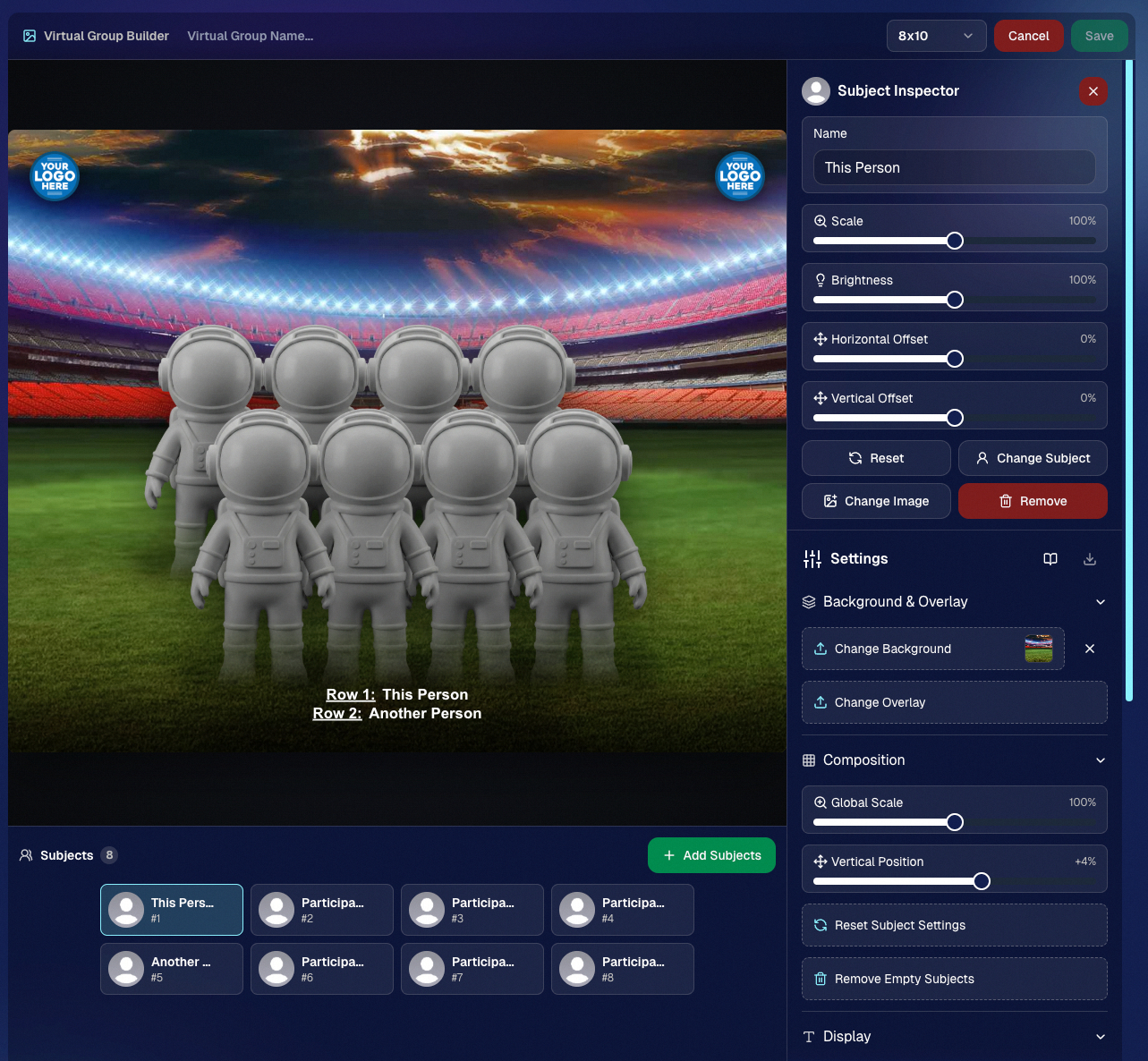
Desktop Dashboard view of the new Virtual Group Builder

‍

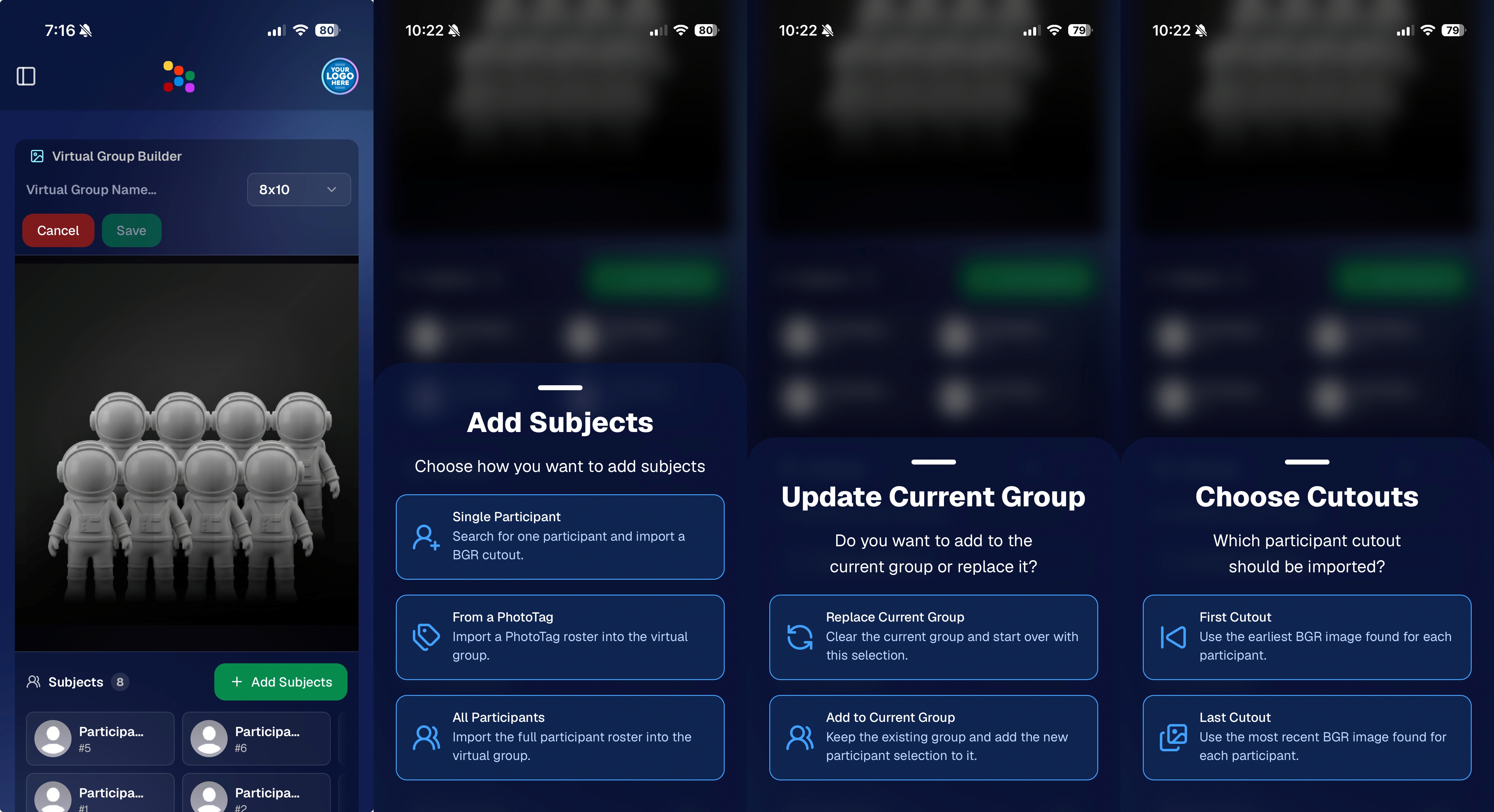
Mobile Dashboard view of the new Virtual Group Builder

‍

🎓 Candy Image Studio: New Graduation Tools

‍

Candy Image Studio got some very timely upgrades for graduation season:

‍

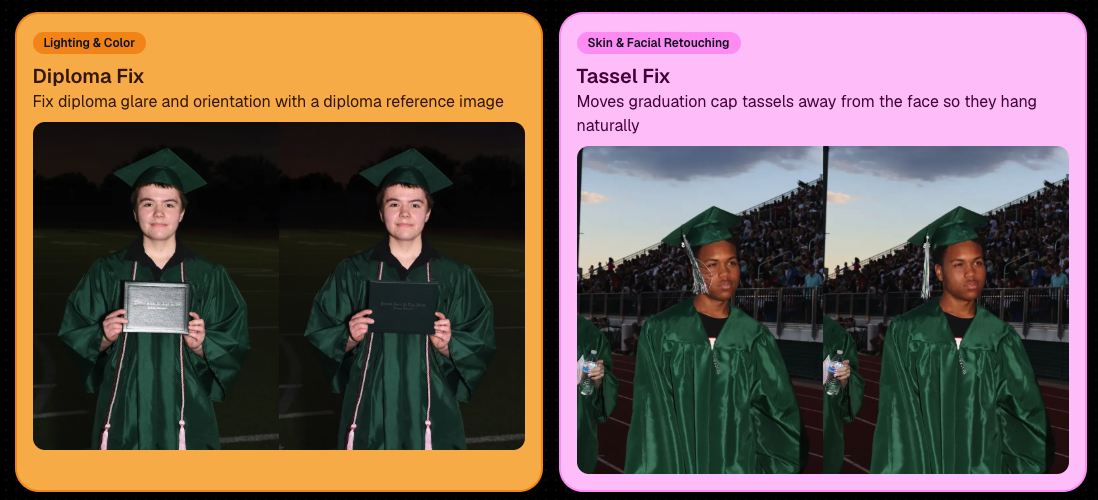
🎓 New “Diploma Fix” node‍

  • Helps fix diploma orientation and glare. You’ll need to upload a reference diploma so Candy knows what the diploma should look like, including details like school name, emblem, fonts, and colors.

‍

🎗️ New “Tassel Fix” node‍

  • Helps adjust graduation tassels that are covering a subject’s face — similar to Stray Hair Removal, but tailored specifically for grad tassels.

‍

👓 Improved Reduce Glass Glare‍

  • This node is now more reliable and less likely to accidentally add glasses to subjects who aren’t wearing them.

‍

‍

📣 Client Outreach Improvements

‍

Client Outreach got a few useful updates to help save money and keep lists cleaner:

‍

🚫 Unsubscribed contacts excluded by default‍

  • Imported Client Outreach contacts now exclude unsubscribed contacts unless you choose to include them.

‍

🔘 New “Include unsubscribed contacts” toggle‍

  • You can still include them if needed, but the default helps avoid spending on contacts who can’t receive your outreach.

‍

👀 Show Hidden on Client Lists‍

  • The Client Outreach list page now has a Show Hidden option, similar to Offers and PhotoRoster organizations.

‍

🧭 Client List sidebar shortcut‍

  • The Client Outreach sidebar item now takes you back to the Client List page more clearly.

‍

🖼️ Image Management & Dashboard Upgrades

‍

🧩 Image Release Gallery redesign‍

  • The Image Release Gallery now uses a masonry layout like retail, supports lightboxes with arrow key navigation, has CMD/CTRL+F search support, and saves filters in the URL.

‍

🧑‍💻 Manual Assignment page refresh‍

  • The Participant Manual Assignment page has a cleaner, more intuitive UI.

‍

⭐ Camera star ratings on Image Details‍

  • If your camera includes star ratings, they now appear on the Image Details page.

‍

⬇️ Image Details convenience buttons‍

  • Image Details now includes quick actions to download or open in Candy Image Studio.

‍

🏷️ PhotoTag ampersand fix‍

  • PhotoTag names with ampersands now save correctly.

‍

🧍 Merged participant name fix‍

  • Manual Assignment now shows the selected participant’s name instead of the first merged participant’s name.

‍

🔙 Event sidebar remembers filters‍

  • When going back to the Event List from an Event Overview page, your filters are remembered as long as you haven’t refreshed.

‍

🔁 Pricing tier reset button‍

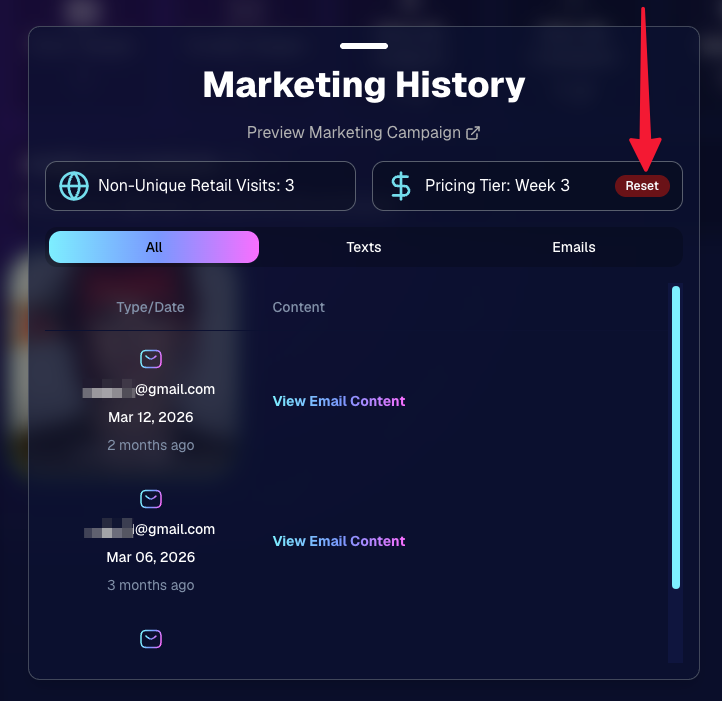
  • Participant marketing history now includes a button to reset a participant’s pricing tier start date, useful if support wants to re-offer first-week pricing.

‍

‍

🪪 Positive ID QR Code downloader options‍

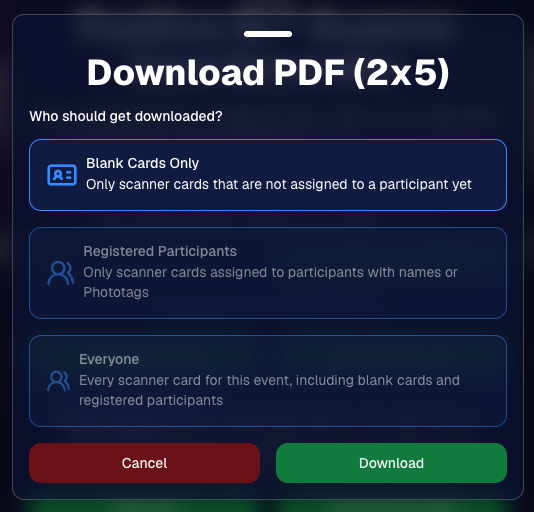
  • You can now download blank cards only, registered participants only, or everyone, making scan card PDFs easier to manage for multi-workflow sports events.

‍

‍

🛠️ New Tool: Image Converter

‍

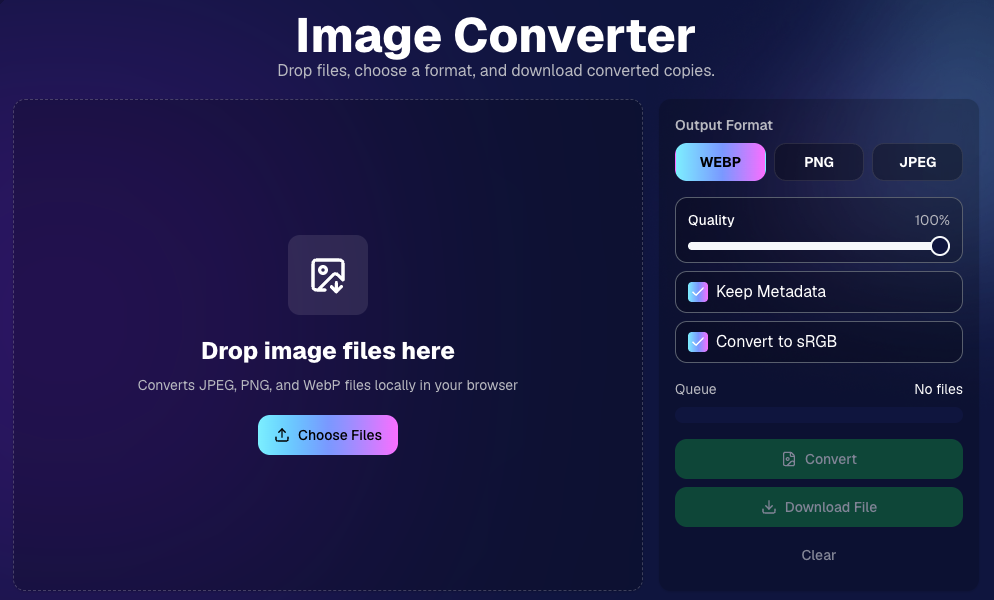
There’s a new tool under Tools & More → Image Converter.

‍

Use it to:

‍

🔄 Convert images to WEBP, PNG, or JPEG

‍

🎨 Convert images to sRGB

‍

Handy for preparing files before uploading them to NowCandid Events.

‍

‍

📚 New Capture App Camera Docs

‍

We added a dedicated docs page for confirmed camera models that work with the Capture App.

‍

More cameras may work than what’s listed, but this page focuses on models we’ve confirmed.

‍

Docs page: https://app.nowcandid.com/docs/capture-app/cameras

‍

🛍️ Retail Improvements

‍

📬 New Contact Us form on retail‍

  • The Contact Us popup now includes a form that sends support an email with helpful details automatically included, such as browser info, window size, retail link, Event details, and order number when available. This should make support faster and reduce back-and-forth.

‍

🖼️ Overlay step now comes before cropping‍

  • This prepares retail for future improvements while keeping product customization clearer.

‍

🗓️ Smarter Year captions‍

  • Certain products now default the Year caption to the Event start year or participant Day 0 year instead of the current year. Helpful for late-December events or older graduation galleries.

‍

🌍 International order fix‍

  • Fixed an edge case where some international orders could send multiple receipts and incorrectly show that the order wasn’t submitted.

‍

🤳 Selfie Check-In & Capture App Updates

‍

📶 Clearer Selfie Check-In upload errors‍

  • If a selfie upload fails, subjects now see a more specific error reason — like upload speed being too slow — so they know what to try next.

‍

📱 Capture App 5.6.3 OTA update

  • Contact Info Settings now says Tap-A-Face or Type & Take based on the Event program
  • The 1000×1000 reference image requirement has been removed for Selfie Check-In Station and Roster Check-In, especially helpful for Android devices with lower-resolution cameras

‍

That’s the week!

‍

Virtual Group Builder is the big one, especially for sports and volume workflows — but between Client Outreach, Candy Image Studio, Image Converter, and retail support improvements, there’s a lot here to make your next Event easier to manage.

‍

Keep creating magic,‍

Candy 🍬

Let’s get in touch

If you’re a photographer looking to add NowCandid™ services to your wheelhouse, set up a call with us!

How to customize formatting for each rich text

How to customize formatting for each rich text

How to customize formatting for each rich text

How to customize formatting for each rich text

How to customize formatting for each rich text

‍

‍

What’s a Rich Text element?

The rich text element allows you to create and format headings, paragraphs, blockquotes, images, and video all in one place instead of having to add and format them individually. Just double-click and easily create content.

A rich text element can be used with static or dynamic content. For static content, just drop it into any page and begin editing. For dynamic content, add a rich text field to any collection and then connect a rich text element to that field in the settings panel. Voila!

Headings, paragraphs, blockquotes, figures, images, and figure captions can all be styled after a class is added to the rich text element using the "When inside of" nested selector system.

  • List One
  • List Two
  • List Three
  • List Four
  • List Five

This is a link

This is bold text

‍

  • ‍

‍