HomeNavigation arrowBlogNavigation arrow
Current page
Photography Tips

The Hidden Cost of Shipping in Volume Photography

The Hidden Cost of Shipping in Volume Photography

by Jack Counts III - NowCandid Project Manager

‍

A photography business recently switched to NowCandid from another volume photography platform...

‍

During the transition, they shared some details about how their previous software handled shipping and fees.

‍

I knew different platforms approached this stuff differently. But seeing the mechanics laid out was one of those "wait… what?" moments.

‍

In the setup they described, the photographer didn’t set the shipping charge. They didn’t keep that shipping money. But the amount charged for shipping still increased the percentage-based fees coming out of their payout.

‍

Which is honestly kind of wild to me.

‍

Let me break down why:

  1. The shipping & handling amount could be set outside the photographer's control.
  2. The photographer would not generate any additional revenue on this shipping charge, which may be marked up.
  3. The photographer would pay ecommerce, payment processing, and potentially sales tax on the collected shipping.

‍

That can add up to some significant % in additional costs that photographers might not otherwise notice.

‍

Hearing about this hard-to-notice cost got me thinking about shipping in the volume photography space.

‍

What does that shipping charge actually cost the photographer?

‍

Some volume photography platforms use lab-set shipping rates for orders delivered directly to customers. GotPhoto’s documentation (help.gotphoto.com/en/support), for example, says its direct-shipping charges are determined by the lab and automatically added at checkout.

‍

Then there’s a separate question: Does that shipping charge also increase the fees coming out of the photographer’s payout?

‍

PhotoDay’s published standard pricing (support.photoday.io/en/articles) applies its 10% ecommerce fee to the total order, including products, shipping, and tax. Its reporting guide (support.photoday.io/en/articles) says customer-paid shipping goes directly to the lab.

‍

Let’s use a hypothetical order as an example with $50 in photo products plus $10 shipping. The customer pays $60 before tax.

‍

A 10% ecommerce fee on the $50 in products would be $5. But because that fee also applies to shipping, the photographer pays $6 in total ecommerce fees instead of $5 (before accounting for any additional ecommerce fees on collected sales tax).

‍

That extra dollar might not sound like much. But it means the ecommerce fee consumes 12% of the photographer’s product sales, even though the photographer doesn’t keep any shipping revenue.

‍

That’s an additional two percentage points of product revenue going toward ecommerce fees because of shipping.

‍

Here’s how that changes across a $5–$20 shipping range:

‍

How shipping affects ecommerce fees on $50 in product sales
Customer's shipping charge 10% ecommerce fee on shipping alone Total ecommerce fee on products + shipping Effective fee as a share of $50 in product sales
$5 $0.50 $5.50 11%
$10 $1.00 $6.00 12%
$15 $1.50 $6.50 13%
$20 $2.00 $7.00 14%

Illustrative calculations assume $50 in product sales and a 10% ecommerce fee applied to products plus shipping. They exclude payment processing, sales tax, and fulfillment costs.

‍

Payment processing adds another layer. Under PhotoDay’s published 2.9% processing rate, that $10 shipping charge generates another $0.29 in fees. Combined with the $1 ecommerce fee, that’s $1.29 attributable to shipping alone, equivalent to 2.58% of the $50 in product sales. The fixed $0.30 transaction fee is separate; it isn’t an additional charge caused by shipping, so we don't need to include that in this math we're doing to determine additional cost.

‍

Across 1,000 orders like this, that adds up to $1,000 in ecommerce fees plus $290 in processing fees attributable to shipping.

‍

To be clear, charging processing on shipping isn’t the problem by itself. I understand why processing a larger payment costs more, and I’m not assuming shipping revenue is all profit for the lab, since packaging, handling, and postage need to be covered. The problem is that it’s one more fee applied to a number the photographer doesn’t control. The lab or platform sets the shipping charge, and if that charge runs high, the photographer still pays a percentage on every dollar of it.

‍

PhotoDay does let photographers offer free economy shipping as a promo (support.photoday.io/en/articles), and its reporting guide (support.photoday.io/en/articles) says that when you do, the shipping cost is deducted from your payout. That takes the charge off the customer’s plate, but the photographer still isn’t the one setting it. The amount comes from the lab’s shipping rates on the price sheet, and those may be customer-facing rates with markup built in, not what it actually costs to get the package out the door.

‍

High shipping costs can put the whole order at risk

‍

The photography business I talked with also shared with me how costs related to expensive-to-ship items were entirely passed on to end customers during checkout.

‍

Say someone picks out a $70 product, then discovers shipping adds another $20. Their purchase just became almost 29% more expensive, before tax.

‍

Maybe they’re fine with that. Or maybe that’s the moment they close the tab.

‍

Baymard Institute’s checkout research (baymard.com/lists/cart-abandonment) lists high extra costs, including shipping, taxes, and fees, as the top reason shoppers give for abandoning checkout, cited by 40% of respondents. That’s general ecommerce research, not a photography-specific rate, but it’s a pretty compelling reason to pay attention to the shipping line.

‍

And the actual fulfillment expense doesn’t necessarily have to appear entirely in that line.

‍

Consider two hypothetical ways to price the same purchase:

‍

Same $90 total, different shipping prices
Price breakdown Higher shipping Lower shipping
Product price $70 $85
Shipping $20 $5
Total before tax $90 $90

Hypothetical pricing example. Both options total $90 before tax; the difference is how the price is divided between the product and shipping.

‍

Same total. Different presentation.

‍

There’s research suggesting that distinction matters. A 2026 study in PLOS ONE (journals.plos.org/plosone) found a preference for free shipping even when the total purchase price stayed constant. It was a small study, but it gives us a reasonable question to test: Would customers respond better if more of the fulfillment cost were included in the product price and less appeared as shipping?

‍

We’ve recently seen abandoned carts come in at about 3% of the orders placed. In other words, for every 100 orders, only about 3 shoppers added something to their cart and never checked out, so we seem to be doing something right. 😎

‍

How NowCandid gives photographers more control

‍

With NowCandid, photographers can set their customer-facing shipping prices (nowcandid.com/blogs), rather than simply passing through a lab-set charge. They can also price shipping above the underlying cost to create additional margin.

‍

But having the opportunity to profit from shipping doesn’t mean you should always charge more for it.

‍

You can keep shipping very inexpensive and account for more of the fulfillment expense in your product pricing instead. That’s especially useful when you’d rather not put a large delivery charge in front of someone buying a more expensive item.

‍

We also don’t calculate our ecommerce or payment-processing percentages on collected sales tax (nowcandid.com/blogs). Collecting tax and charging additional fees on those tax dollars are two separate things.

‍

It’s about more than cheaper shipping

‍

Looking back at that conversation, the part that bothered me wasn’t simply the shipping price. It was how little control the photographer had over a charge that affected both their profit and their customer’s experience.

‍

On one side, shipping can increase the fees coming out of your payout. On the other, it can make a purchase feel more expensive at the exact moment someone is deciding whether to complete it.

‍

That deserves more consideration than “that’s just what the lab charges.”

‍

And addressing it doesn’t necessarily mean giving up margin. In our $90 example, we didn’t lower the customer’s total, we moved more of the price into the product and less into shipping. Whether that presentation works better for your customers is worth testing, but you need the flexibility to try it first.

‍

That’s what I’d encourage photographers to look at when comparing volume photography software: Who sets the shipping price? Who receives that money? What additional fees does it generate? And can you change it when it isn’t working for your business?

‍

The advertised ecommerce % fee only tells part of that story.

‍

I don’t think every photographer needs the same shipping strategy. Some may want a reasonable margin on shipping. Others may prefer a higher product price and a very low shipping charge. That flexibility is what we want to provide with NowCandid.

‍

Shipping is part of your pricing. You should get a say in it.

‍

Thank you for attending my TED talk 🙏

Jack Counts III

NowCandid Project Manager

‍

NOTE: Platform examples reflect published policies and standard rates reviewed September 25, 2026. Terms can vary by lab, plan, promotion, or agreement. Order examples are illustrative, not reported studio results.

Related articles

Weekly Recap: NowCandid Docs Are Here (60+ Pages), Capture App 5.6, and Smarter Retail + Dashboard Tools
Feature Updates
May 1, 2026

Weekly Recap: NowCandid Docs Are Here (60+ Pages), Capture App 5.6, and Smarter Retail + Dashboard Tools

8
 minutes read
Hey photo friends! 👋

‍
This week’s updates are packed with improvements that make your day-to-day workflow smoother—especially if you like clear answers, fewer edge cases, and cleaner experiences across Capture, Retail, and the Dashboard.

‍

The headline this week: NowCandid Docs are officially live inside the Dashboard—and they’re already huge. Let’s jump in. 💫

‍

📚 NEW: NowCandid Docs (Built Into the Dashboard)

‍

We’ve launched official, up-to-date NowCandid documentation directly inside the Dashboard. Just click “Docs” in the sidebar to open it.

‍

Here’s what makes it special:

‍

  • • One dedicated place for everything: programs, workflows, Capture App, JerseyJotter, Candy Culler, and more
    ‍
  • • Over 60 pages of documentation already (with screenshots and even some videos)
    ‍
  • • Regular updates, with a timestamp on each page showing when it was last updated
    ‍
  • • Smart Docs search (use the search button at the top of the Docs sidebar)
    ‍
  • • Mobile supported: works fully inside the Mobile Dashboard app
    ‍
  • • Clickable images: click any image to preview it bigger
    ‍
  • • Table of contents + feedback: on larger screens, you’ll see a right-side table of contentsand a “Give Feedback” button to report missing info, typos, or confusing sections
    ‍
  • • Private by default: you can share a docs link, but the viewer must be logged in to access it

‍

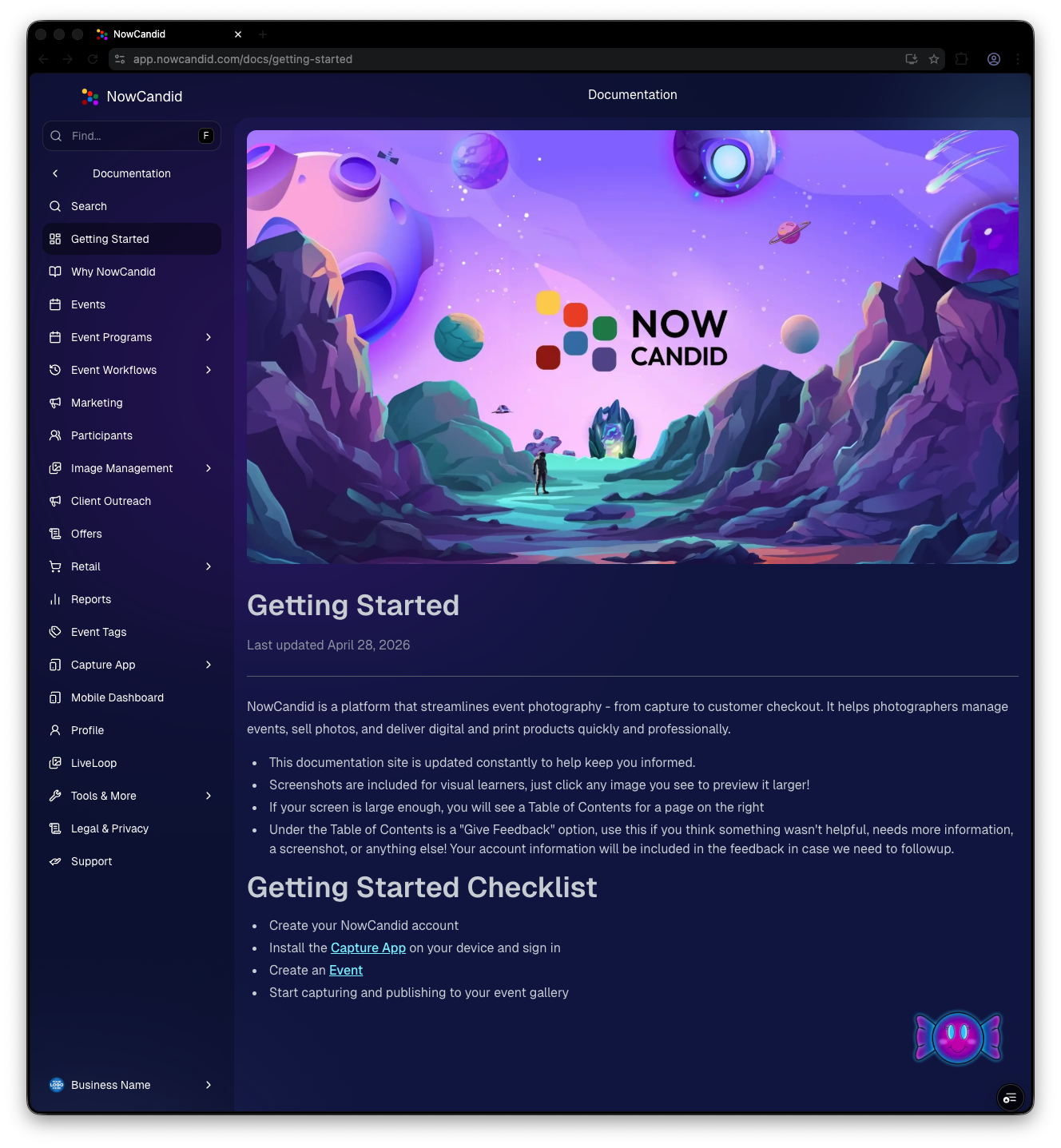
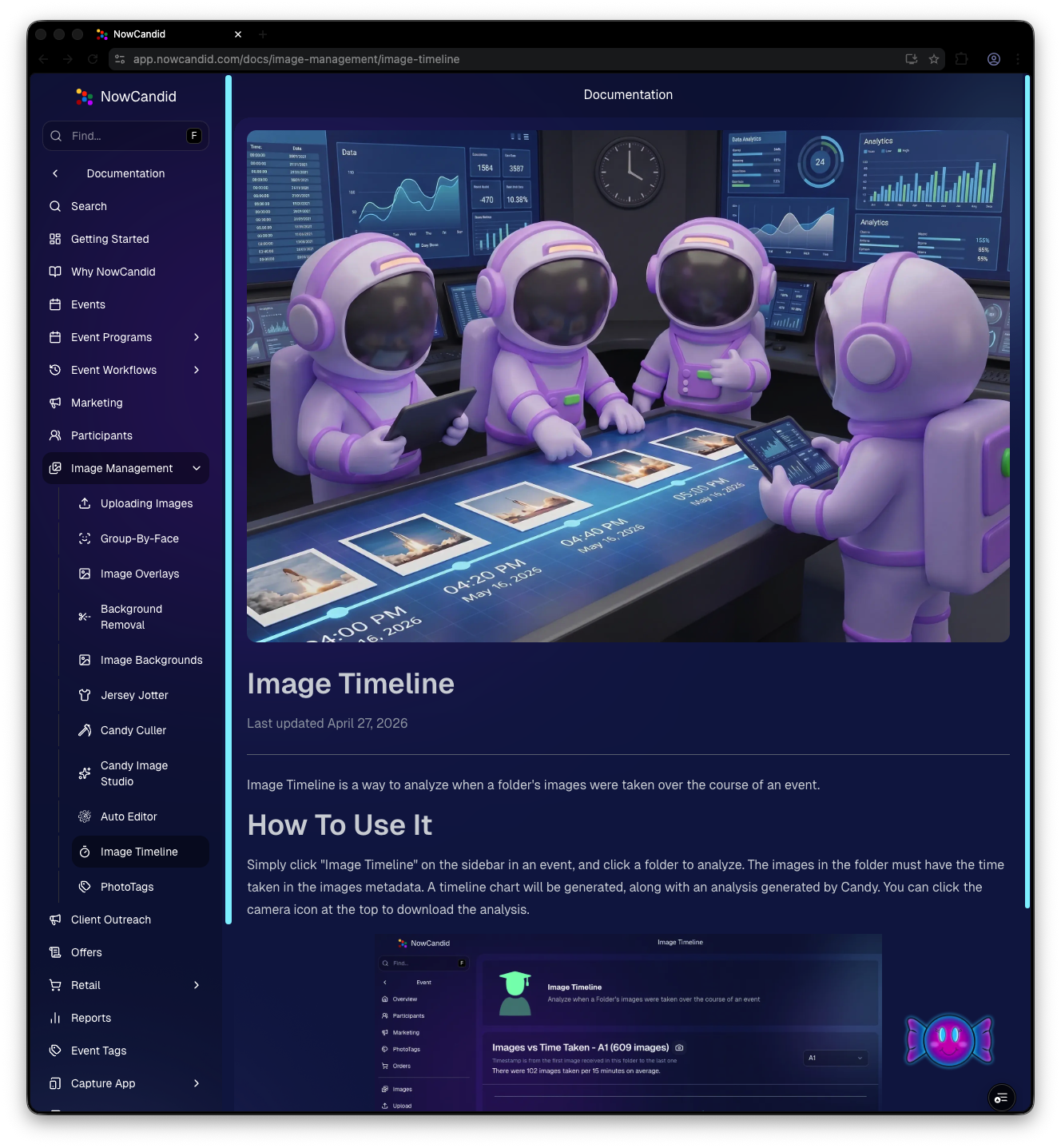
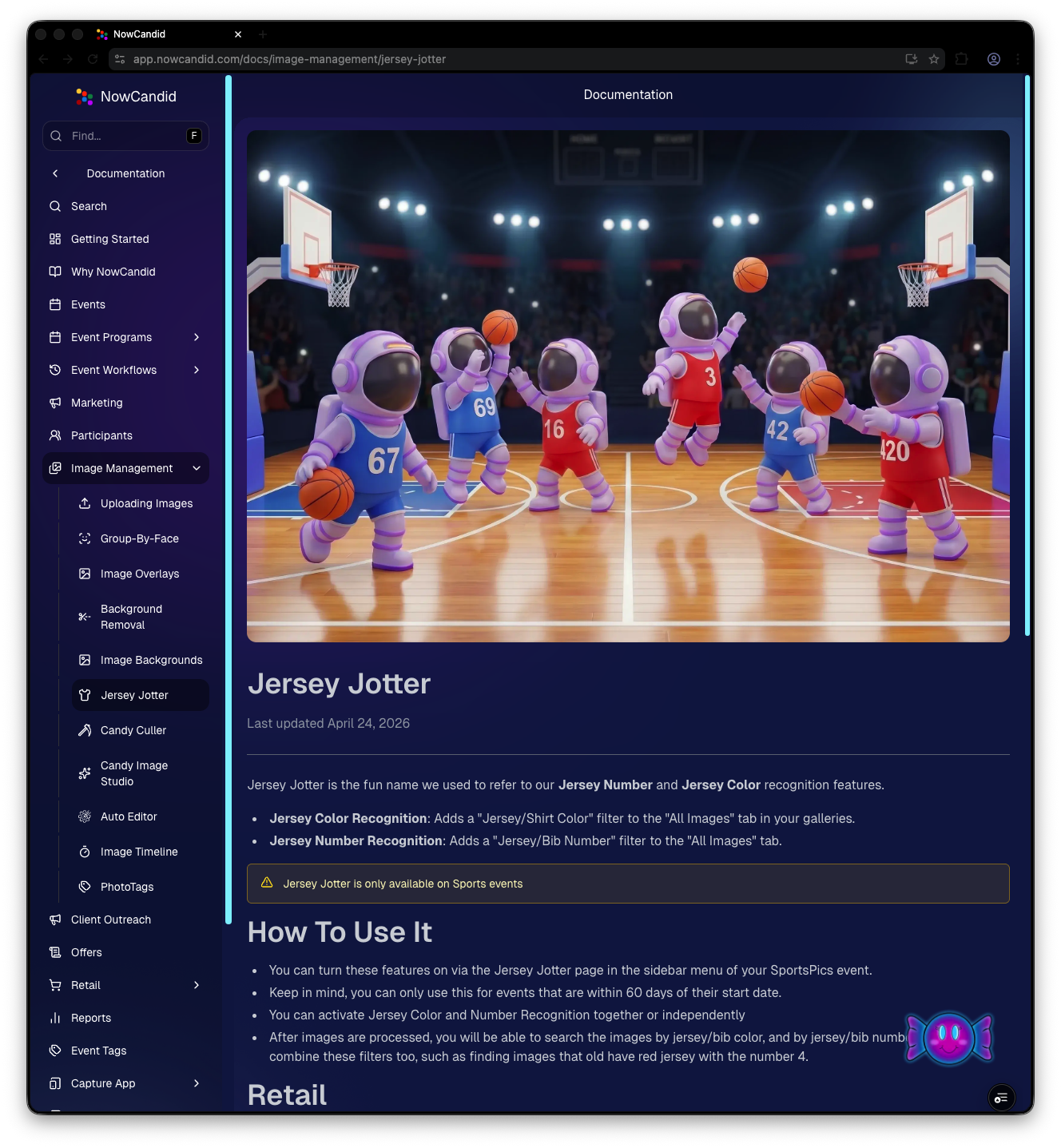
Preview of New NowCandid Docs
NowCandid Docs Image Timeline page preview
NowCandid Docs Jersey Jotter page preview

‍

🍬 Candy got smarter (because Docs exist)

‍

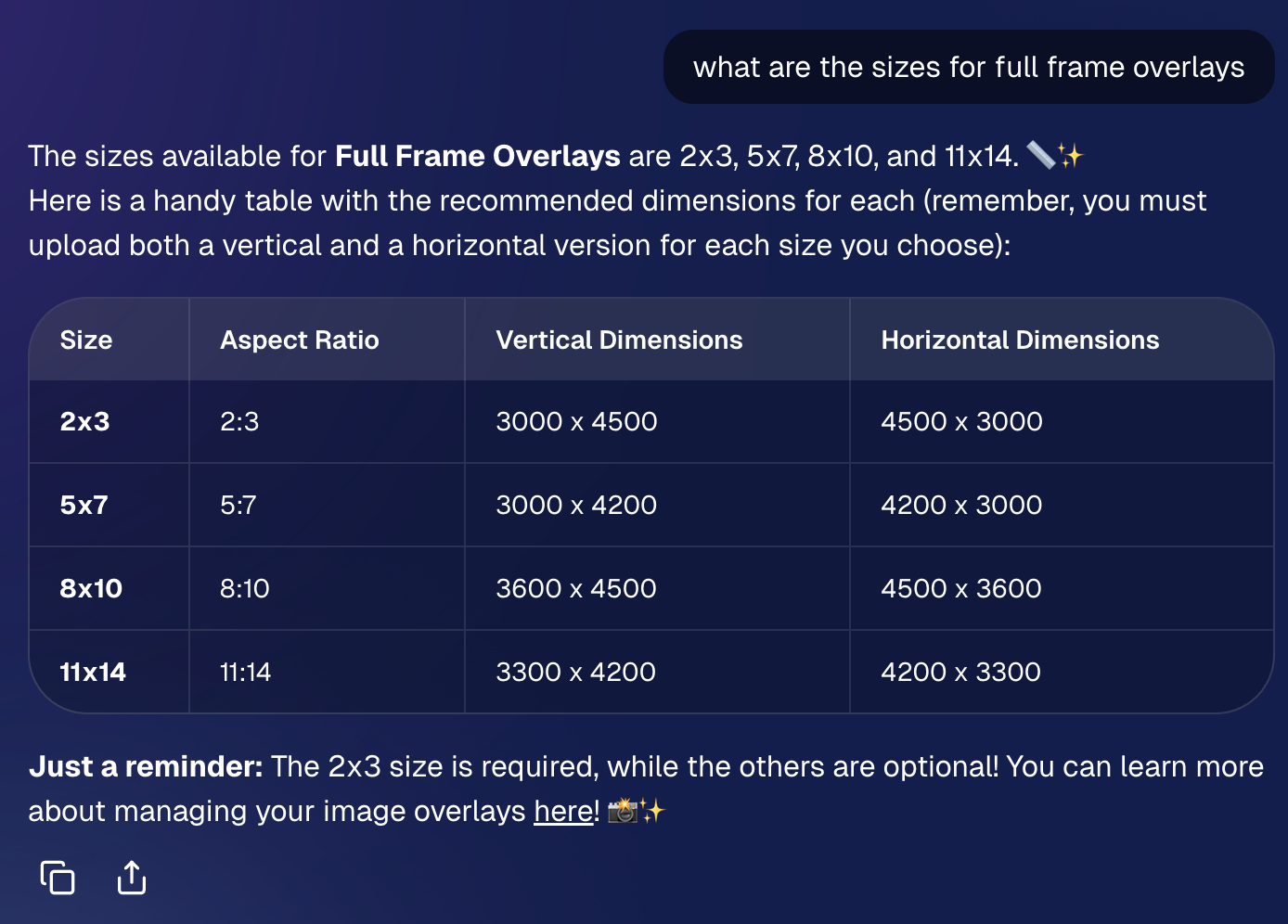
Candy now pulls from the new Docs when answering questions—so she can:

‍

  • • Share direct links to guides
    ‍
  • • Pull relevant screenshots and videos
    ‍
  • • Give more accurate, up-to-date help

‍

Also, the Candy Navigation Assistant now uses docs search as the fallback destination if it can’t find a page you’re looking for—often with your question prefilled!

‍

‍

📱 Capture App 5.6 (iOS & Android) — Not OTA

‍

Capture App v5.6 is now available for iOS and Android (this is not an OTA update).

‍

What changed:

‍

  • • Fix: Android “Update Available” popup now correctly links to Google Play, not the Apple App Store
    ‍
  • • Feature: The app now rejects images under 1,000 pixels with an error popup (similar to the color profile error). The Dashboard already enforced this, but this prevents rare edge cases—like a camera outputting low-res images during capture.

‍

🛍️ Retail Improvements (Better behavior, clearer checkout)

‍

A few retail updates landed that improve clarity and fix edge cases:

‍

  • • BGR + PhotoTags fix: Background removed images in PhotoTag events will now show correctly even if the originals are marked invisible
    ‍
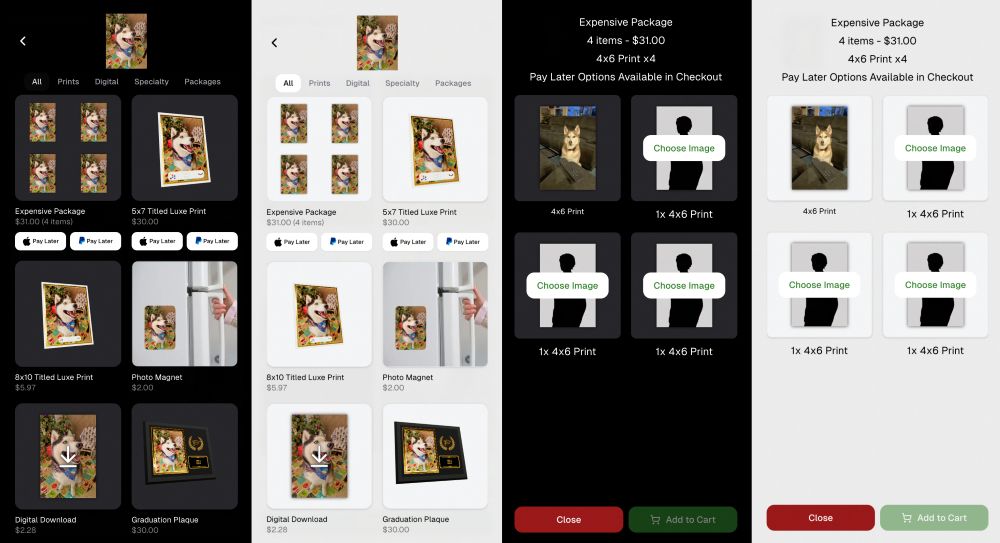
  • • Pay Later badges removed from the store sheet (the “Pay Later Options Available in Checkout” messaging still appears in package configurators for packages $30+)
    ‍
  • • Z-cropped images now show faceboxes (and the faceboxes are adjusted to the z-crop, too)
    ‍
  • • Checkout completion screen now shows your Business Logo (if you’ve added one)
    ‍
  • • Updated “Your order is complete” copy to note:
    • retouching may delay orders
    • physical products typically arrive in 7–14 business days

‍

🖥️ Dashboard Updates (Clarity, savings, and better reporting)

‍

  • • Positive ID edge case fixed: Manually assigned images now show up correctly in an additional contact’s gallery
    ‍
  • • Client Outreach SMS savings: Non-standard encoded apostrophes now auto-convert to standard apostrophes to reduce segment costs
    ‍
  • • Auto Editor access fix: Resolved an issue preventing some users from accessing Auto Editor
    ‍
  • • New Candy Image Studio node: Traditional Black & White (distinct from the Black and White Film Print node)
    ‍
  • • Reports pages upgraded: Added titles and descriptions for better clarity
    ‍
  • • Participant List: Unmarketable Participants filter
    • •You can now filter to show only unmarketable participants—or hide them
    • •The download sheet now includes an “Unmarketable” column (Yes/blank)
    • •“Unmarketable” can include opt-outs/unsubscribes, invalid contact info, etc.

‍

🍬 Candy UI improvements

‍

Candy received a bunch of UX upgrades, including:

‍

  • • Click images to preview larger
    ‍
  • • New table rendering
    ‍
  • • Scroll fades
    ‍
  • • Type without having to click/focus the input first

‍

📱 Mobile Dashboard Improvements (No app update needed)

‍

  • • Fixed sidebar scrolling triggering “pull to refresh”
    ‍
  • • You can now slide/pull from the side to open the sidebar—no need to scroll to the top and tap the sidebar button

‍

That’s the week! 💫

‍

This release is all about reducing friction—with official docs inside the Dashboard, a tighter Capture App, better retail behavior for BGR and z-crops, and Dashboard refinements that improve accuracy, clarity, and even lower messaging costs.

‍

Keep creating magic,

‍

— The NowCandid Team 🍬

Keep More of What You Earn with NowCandid™
NowCandid 101
April 28, 2026

Keep More of What You Earn with NowCandid™

5
 minutes read

A lot of platforms are happy to look affordable at first—and expensive later.
We prefer the opposite.

NowCandid™ is built to support photographers long-term, which means our pricing is designed to be easy to understand, easy to plan around, and easier to live with as your volume grows. When you’re running real events—schools, sports, graduations, leagues—the last thing you need is a platform that nickel-and-dimes you for the core tools required to deliver and sell images.

The Simple Part: Two Fees, No Subscriptions

With NowCandid, your costs are straightforward:

  • • 5% e-commerce fee
  • • 3% payment processing fee

That’s it.

There’s no subscription fee and no onboarding fee, so you’re not paying monthly just to keep your account active—or paying extra just to get started.

The Important Part: No Surprise Add-Ons

Many platforms charge extra for the features that actually make your events run smoothly. NowCandid includes the tools high-volume photographers rely on without tacking on separate line items.

Here’s what you don’t pay extra for:

  • • No fees on sales tax collected
  • • No extra charge for background removal
  • • No extra charge for automatic exposure correction
  • • No extra charge for image storage
  • • No extra charge for automated SMS + email marketing tools
  • • No extra charge for white-labeling
  • • No extra charge for Face Matching™
  • • At least 20 years of image hosting included

That’s the difference between a platform that adds tools later and a platform that includes the tools up front.

Why This Matters for Real Photographers

When the platform includes the tools you actually need, two good things happen:

1) You keep more margin on every order

If your costs don’t balloon as you scale, more of every sale stays with you—without you having to raise prices just to cover software overhead.

2) Your workflow gets simpler

You don’t have to stitch together multiple services (and multiple bills) to accomplish basic event goals like:

  • • identifying subjects
  • • delivering galleries quickly
  • • protecting images
  • • marketing via text/email
  • • selling through a modern checkout

Those pieces are part of the core system—because they’re not “extras” in real event photography.

The Takeaway

NowCandid is built to support photographers—not squeeze them. Our pricing model is intentionally structured so that the platform remains sustainable for your business as you grow, and so that more of what you earn stays with you.

If you want a platform that’s designed for high-volume reality—and doesn’t charge extra for the essentials—NowCandid is built for you.

Pricing Disclaimer

Pricing, fees, and included features listed in this article are accurate as of the original publication date and may change over time. For the most current pricing and terms, please contact our team.

‍

Weekly Recap: Auto Editor (Beta), Pay Later Badges, and Faster Manage Images
Feature Updates
April 24, 2026

Weekly Recap: Auto Editor (Beta), Pay Later Badges, and Faster Manage Images

5
 minutes read

Hey photo friends! 👋
This week’s updates bring a mix of AI editing power, cleaner review tools, and a small boost to retail conversion clarity—plus a helpful Android Capture App fix.

Let’s jump in. 💫

‍

🧠 Auto Editor (BETA)— AI Edit an Entire Event or Folder

We’re rolling out an Auto Editor (Beta) that can automatically AI-edit:

  • • All images in an event, or
  • • All images in a specific folder

Auto Editor is powered by Candy Image Studio (same nodes, same pricing), and edited images keep their existing matches—just like when you run Candy Image Studio on an event image.

Important notes:

  • • You are billed per image edit.
  • • This is a BETA feature—we recommend testing on yourself (or doing one-offs in Candy Image Studio) before relying on it for a real event.
  • • Auto Editor can run up to 60 days after the event start date, similar to other event workflows.

Common use cases

  • • Light face retouching
  • • Fix subject lighting
  • • Reduce glare on glasses
  • • Remove alcohol
  • • Add green screens

Fun use cases

  • • Automatic glamour looks
  • • Anime style
  • • Chibi style
  • • Anything you can build with a custom text node

Where to find it

  • • On an Event page in the Dashboard sidebar, near JerseyJotter and Candy Culler‍
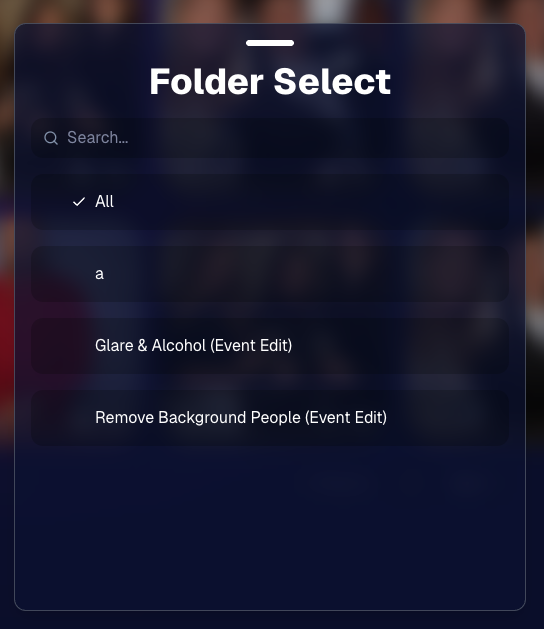
  • • The folder selector will show whether you’re running an Event Edit or a Folder Edit‍
  • • The Event List will show an Auto Editor attribute for events that used it (and includes an Auto Editor filter)
  • • EMP also shows the Auto Editor attribute on its event list page

🎨 Candy Image Editor + Manage Images Improvements

A few upgrades landed that make AI editing and review smoother:

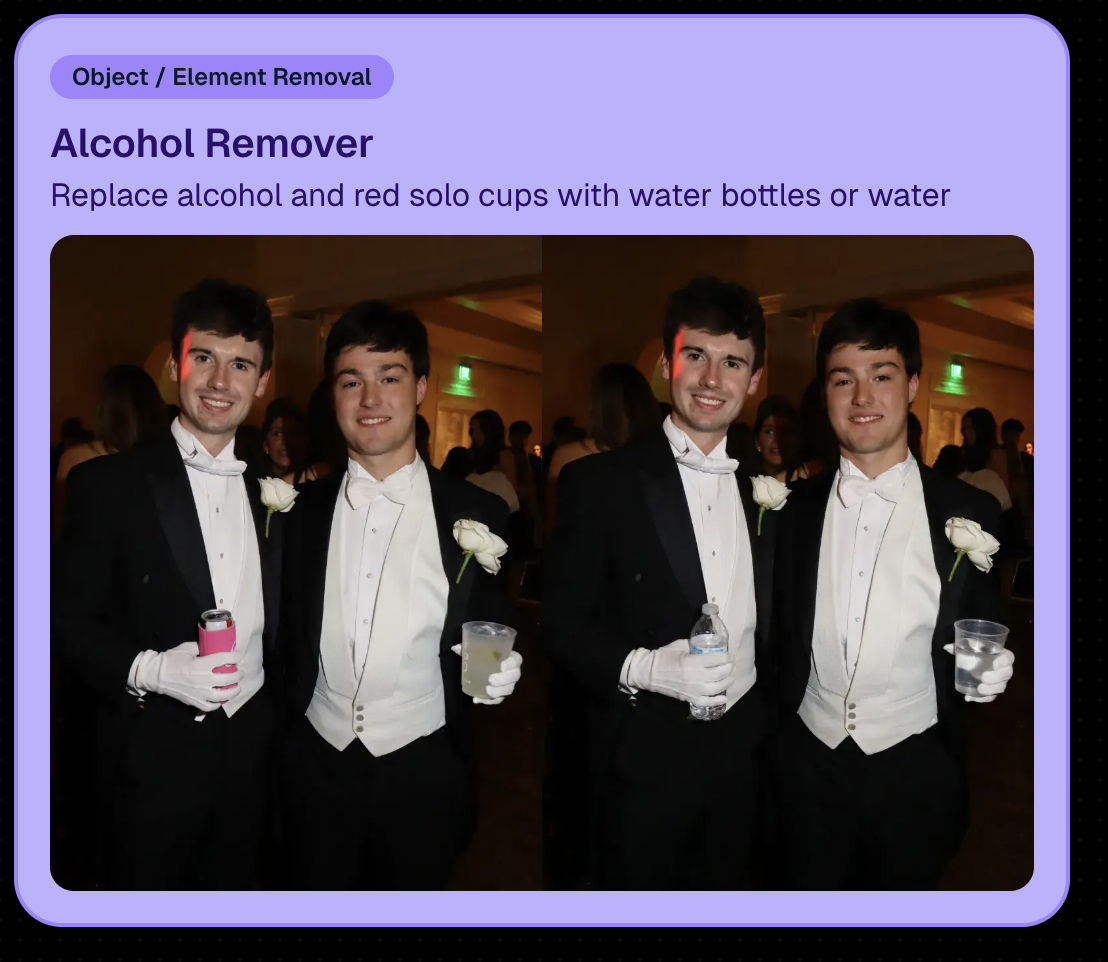
  • • New node: Alcohol Remover is now available in Candy Image Editor.
  • • Replace uploaded images more easily (non-event images): you can drag a new image onto the one you already uploaded to replace it, instead of starting over.
  • • New “Preview Original” option on Manage Images lightbox for AI-edited images uploaded from Candy Image Studio
    • • You can also toggle this view using \.
  • • Manage Images search is faster (image searching performance improved).
New Alcohol Remover Node

‍

Preview Original Image Option

‍

‍

📣 Client Outreach: URL No Longer Required for Texts

Client Outreach texts no longer require a URL, but the system will show a warning if you try to send one without a link.

One important reminder: the number Client Outreach texts send from is different than the number used for automated event marketing—so recipients may not have any message history for context when they receive it.

‍

🏷️ PhotoTags Page: Clearer Counts

The Event PhotoTags page now shows Contacts and Participants as separate columns for better clarity.

‍

🛍️ Retail: Pay Later Badges (more visible financing options)

Retail now shows Apple Pay Later and PayPal Pay Later badges on the store sheet for items $30 or more.

A few notes:

  • • Pay Later options have always been available—this change just makes them more obvious to customers.
  • • This UI may be temporary and could be removed at any time.

Reminders on existing Pay Later availability:

  • • Klarna & Affirm are available through Apple Pay for orders $35+‍
  • • Some credit cards offer Pay Later through Apple Pay (eligibility varies)
  • • Klarna, Affirm, and Zip are available through Google Pay for orders $35+‍
  • • PayPal Pay Later (Pay in 4) is available for $30+‍
  • • PayPal Pay Later (Pay Monthly) is available for $49+

‍

🤖 Android Capture App 5.5: Duplicate Image Fix

The Capture App on Android (v5.5, Google Play) now fixes an issue where some cameras were sending duplicate images to the app.

That’s the week! 💫

Between the new Auto Editor (Beta), smoother “preview original” review flows, and clearer Pay Later messaging on retail, this update is all about saving time and helping customers convert with less friction.

Keep creating magic,
— The NowCandid Team 🍬

‍

Let’s get in touch

If you’re a photographer looking to add NowCandid™ services to your wheelhouse, set up a call with us!

How to customize formatting for each rich text

How to customize formatting for each rich text

How to customize formatting for each rich text

How to customize formatting for each rich text

How to customize formatting for each rich text

‍

‍

What’s a Rich Text element?

The rich text element allows you to create and format headings, paragraphs, blockquotes, images, and video all in one place instead of having to add and format them individually. Just double-click and easily create content.

A rich text element can be used with static or dynamic content. For static content, just drop it into any page and begin editing. For dynamic content, add a rich text field to any collection and then connect a rich text element to that field in the settings panel. Voila!

Headings, paragraphs, blockquotes, figures, images, and figure captions can all be styled after a class is added to the rich text element using the "When inside of" nested selector system.

  • List One
  • List Two
  • List Three
  • List Four
  • List Five

This is a link

This is bold text

‍

  • ‍

‍