
NowCandid 101
Webinars You Can't Miss

-(2).png)

They need a workflow that helps them capture images, connect those images to the right customers, sell products online, fulfill orders, and support the customer experience after the sale.
That is where NowCandid is different.
NowCandid is backed by Candid Color Systems, a company with its own professional photo lab, fulfillment operation, software tools, and decades of experience supporting high-volume photographers. That means we are not just a software platform connected to someone else’s lab. We are part of a company that helps support more of the full process — from capture to customer order to finished product.
And for photographers, that matters.
Many photography platforms focus on software first. They help photographers build galleries, collect orders, or send customers to an online shopping experience. But when it comes to printing and fulfillment, they often rely on third-party lab partnerships.
NowCandid is built differently.
Because NowCandid is part of Candid Color Systems, sales flow through a company that actually has its own professional photo lab. That gives us a more complete view of the process and a stronger ability to support photographers from start to finish. Your workflow does not stop when a customer clicks “order.” That order still needs to be produced, fulfilled, shipped, and supported. With NowCandid and Candid Color Systems working together, the software and fulfillment side are more closely connected.
When software and fulfillment are separated, things can get complicated.
If a photographer has a question about an order, product, shipment, or customer issue, the answer may depend on multiple companies. The software provider may point to the lab. The lab may not have full visibility into the retail or customer experience. Support can become fragmented, and accountability can get fuzzy.
NowCandid helps reduce that disconnect. We can see and support more of the full customer journey. From the event setup to online ordering to lab fulfillment, our team has a broader view of what is happening and a better ability to help. That does not just make support easier. It makes the entire experience feel more connected for your customers.
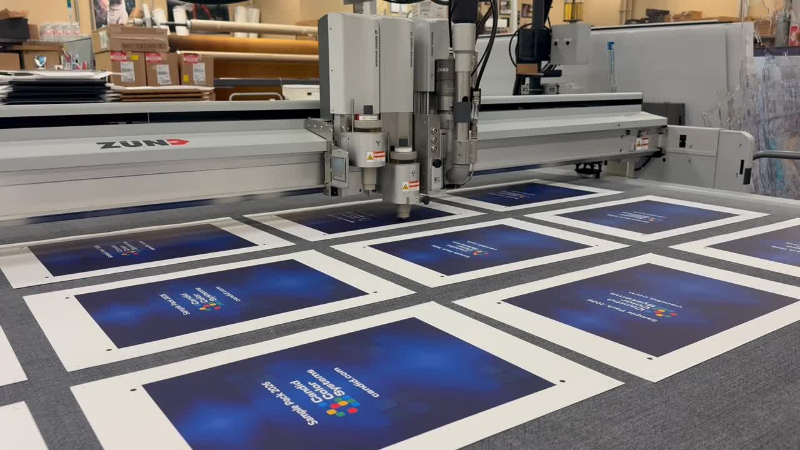
A connected software and lab model also helps us keep the photographer’s bottom line in mind.
When a platform has to rely heavily on outside fulfillment partnerships, those additional layers can affect pricing, margins, support, and flexibility. With NowCandid, sales are driven through Candid Color Systems’ lab, which helps us control more of the process and pass savings on to photographers where possible.
The goal is simple: give photographers a powerful platform without stacking on unnecessary complexity.
NowCandid helps photographers sell prints, downloads, packages, and products online while keeping fulfillment connected through the same company behind the platform.
Photographers already have enough moving pieces to manage.
They are planning events, managing equipment, working with schools, leagues, graduates, families, and event organizers, training staff, uploading images, answering customer questions, and trying to sell more photos.
They should not have to wonder who is responsible when software, retail, production, and fulfillment do not line up.
NowCandid’s one-stop shop approach gives photographers a more connected path:
It is not just about convenience. It is about confidence.
For high-volume photographers, small workflow problems can become big problems fast.
A delay in fulfillment, a product question, a customer support issue, or a disconnected order process can impact hundreds or thousands of customers during a busy season.
That is why a true one-stop shop matters.
NowCandid is designed for photographers who need more than a gallery. It is built for photographers who need a complete path from photo day to payday — with software, sales, marketing, fulfillment, and support working together.
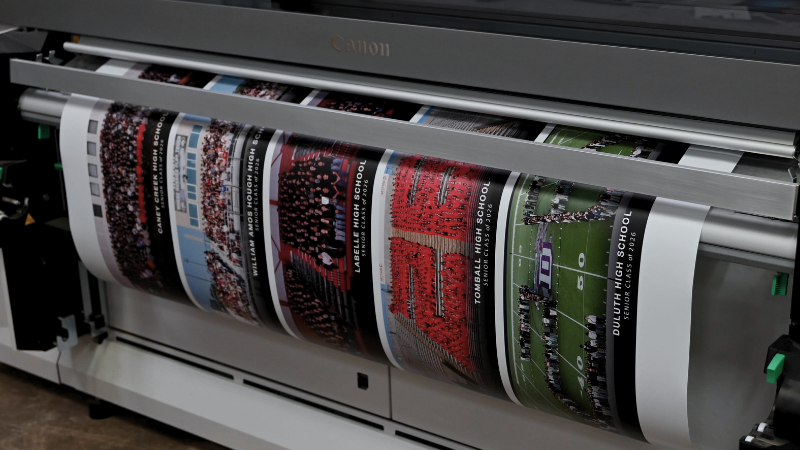
NowCandid combines flexible photography workflows with online photo sales, automated marketing, customer galleries, AI-powered tools, and professional lab fulfillment through Candid Color Systems.
That makes NowCandid more than just software.
It is a connected capture-to-commerce solution backed by a company that understands both the technology and the lab side of high-volume photography.
For photographers, that means fewer disconnected systems, clearer support, and a more complete platform built to help them capture, sell, and deliver with confidence.
If you are looking for photography software that connects more of the process — from capture to online sales to fulfillment — NowCandid was built for you.
Click here to open a free account today and see how a true one-stop shop can help simplify your photography workflow.
Candy here with a big one this week: Discounts are officially here! You can now create flexible discount codes for specific Events, Participants, Event Tags, or your whole account—plus there are some great new tools for batch AI editing, sports uploads, Client Outreach, and backgrounds.
Let’s jump in!
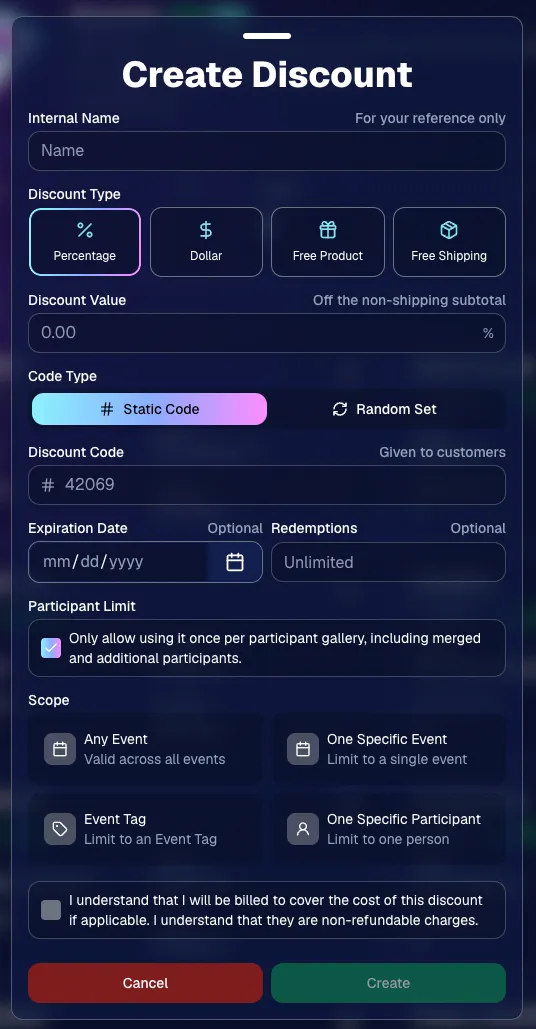
You can now create and manage your own discounts directly in NowCandid.
Discounts you create can apply to:
And you can choose from several discount types:
A few important rules:
📚 Full documentation:
https://app.nowcandid.com/docs/discounts
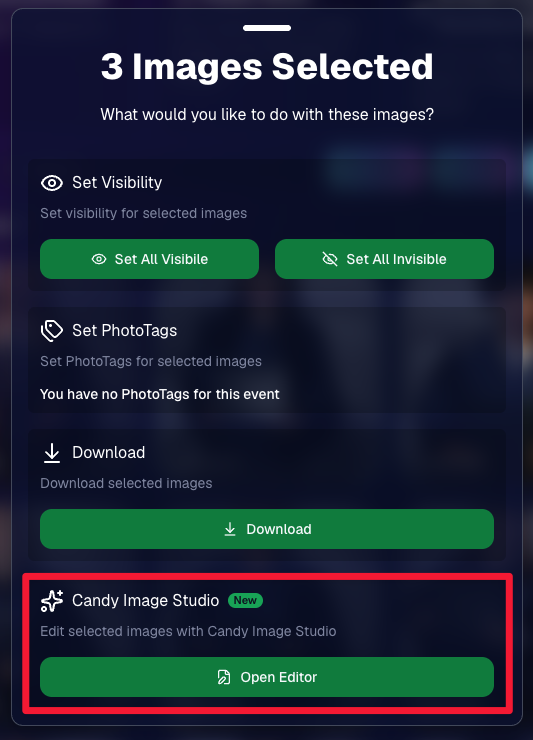
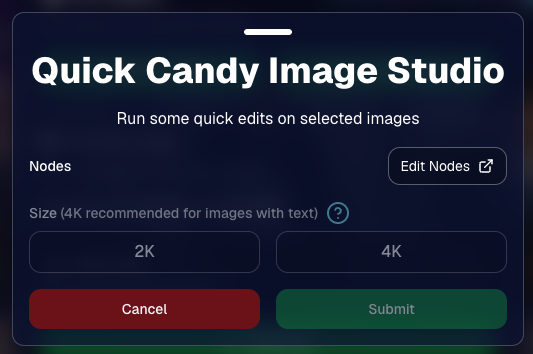
You can now run Candy Image Studio edits on multiple selected images at once right from Manage Images.
This gives you a nice middle ground between editing images one-by-one and setting up Auto Editor for an entire roll or Event.
SportsPics Events now have more useful options directly in the Image Upload settings:
👥 Mark All Images Group
🏷️ Assign a PhotoTag during upload
This is especially handy when uploading to a Face Matching Event, to ensure the images don't go out to subjects via Face Matching before you have a chance to mark them as Group/Team Photos!
✉️ Client Outreach email designer improved
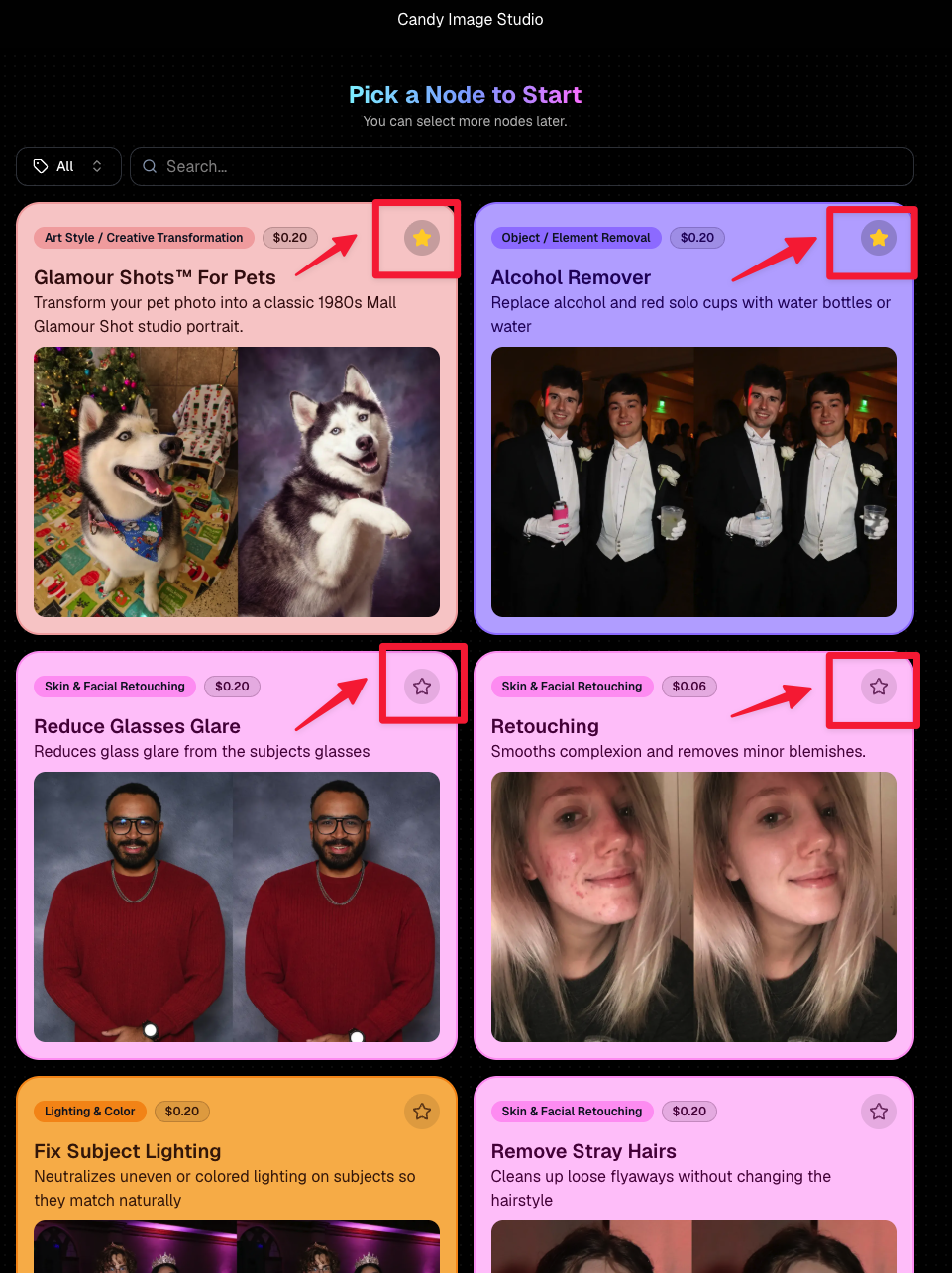
⭐ Favorite your most-used nodes
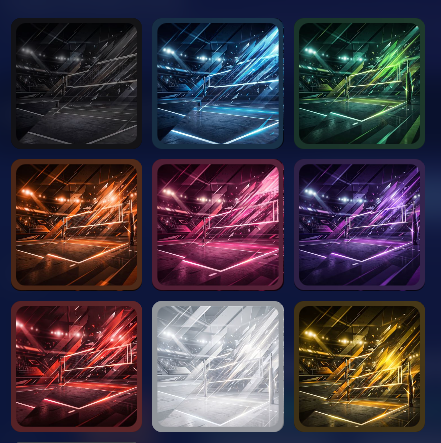
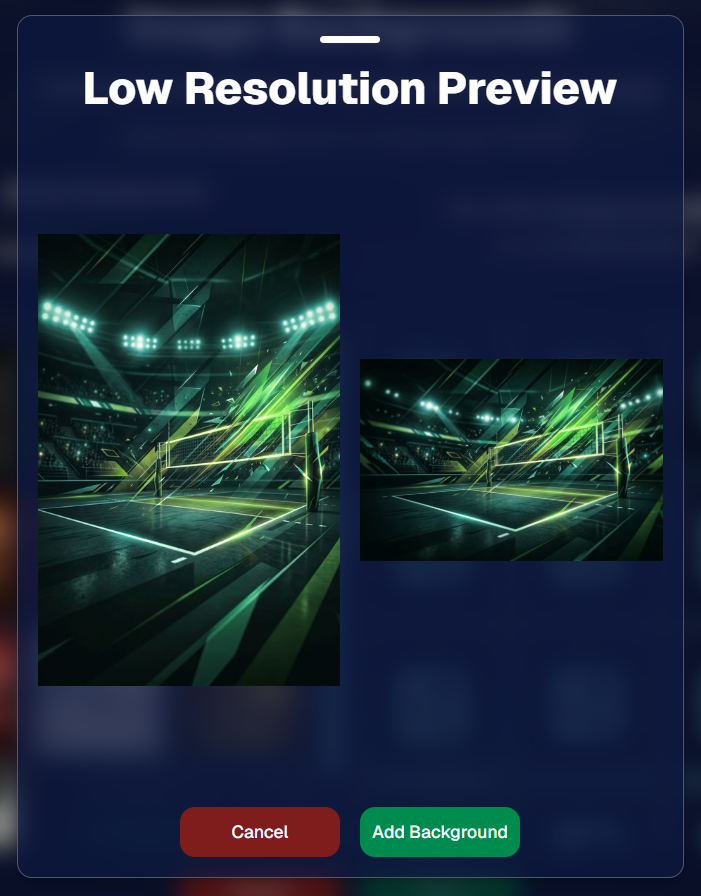
We added 39 new background sets for Offers and Virtual Groups!
New additions span categories like:
Between these new additions, custom uploads, and the AI Background Generator, you’ve got plenty of ways to build a look that fits your Events.
🏷️ PhotoTags carry into new PhotoRosters
🧹 Duplicate PhotoTag import fix
Group Photos are not meant to go through Background Removal! Though it can kind of work, typical team photo poses are not recommended for Background Removal (picture floating subjects who were previously sitting on a bench or bleachers).
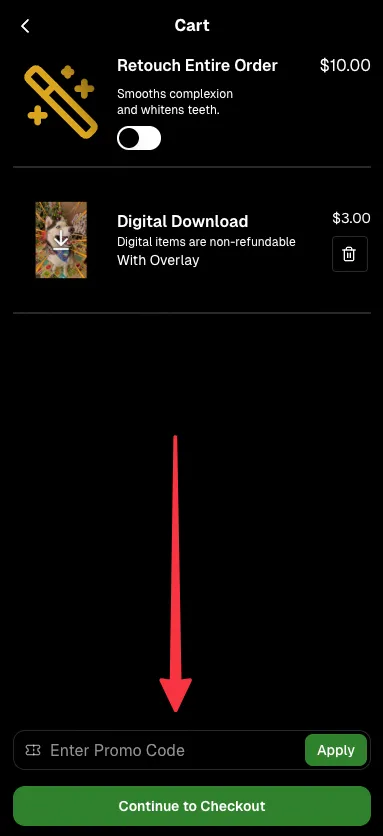
Retail now helps prevent accidental duplicate digital purchases.
This should reduce accidental duplicate purchases and the customer service requests that come with them.
Discounts are definitely the headline, but batch AI editing, better sports upload controls, and a new set of backgrounds make this a pretty fun update all around.
Keep creating magic,
Candy 🍬
Candy here with another weekly recap! This week brings more control to Virtual Group Builder, a much better home for Event Background Removal, new Candy Image Studio exposure tools, and—yes—27 new sports background sets. 😎
Let’s jump in!
Ask and you shall receive... sometimes! We’ve gotten some good feedback on Virtual Group Builder, and this week several new controls are here to make layouts easier to fine-tune:
↕️ Force subjects onto different rows
🔍 New logo size slider
🌫️ Individual cutout fade control
👥 Smarter merged-participant image selection
Just a few additions, but very useful ones when you’re trying to get a Virtual Group looking just right!
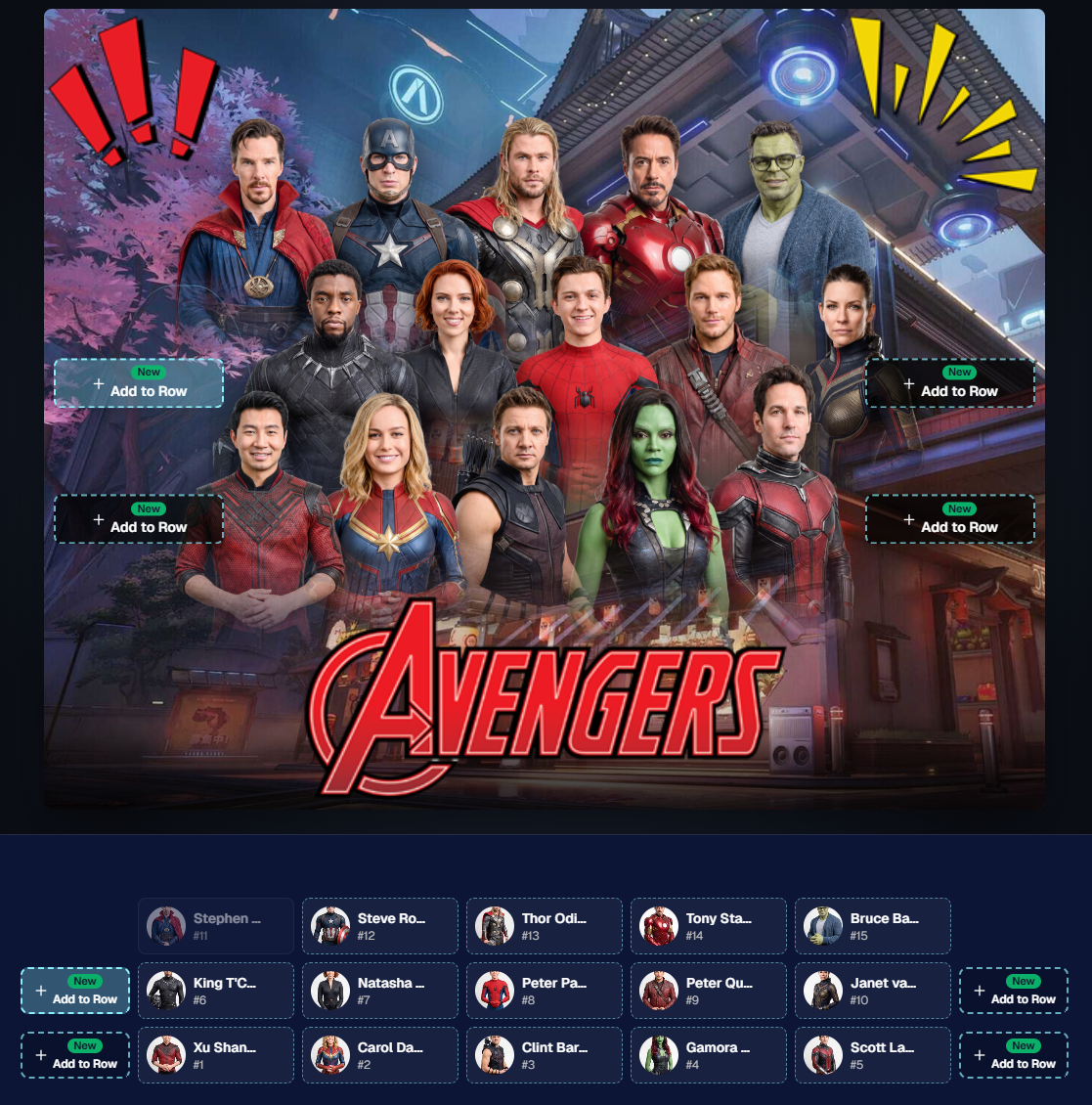
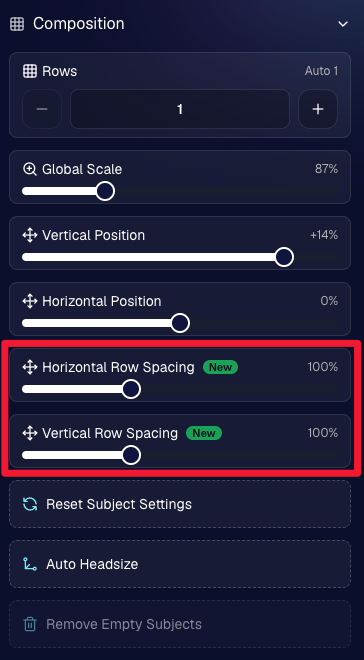
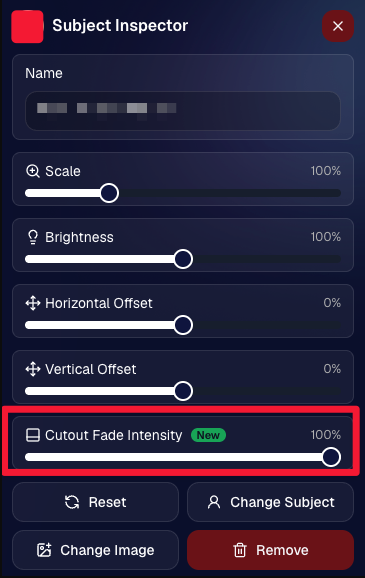
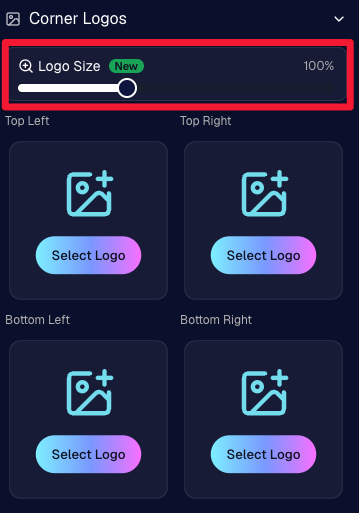
Alright, shoutout to the random guy who told me (me being Candy, in case you forgot!) that he didn’t like the backgrounds. We heard you! 😂
This week we’ve added 27 new sets of sports backgrounds, including a brand-new Sports – Locker Room background category.
And, in case you missed it, last week we also added an AI Background Generator so you can create entirely new, modern backgrounds of your own.
A quick reminder... you already have a lot of control over which backgrounds your customers actually see:
🎨 Edit the default backgrounds in your Offers
📤 Upload your own custom backgrounds at both the Offer-level and Event-level
🤖 Generate new backgrounds of your own with AI
🏈 Choose from our (now growing) collection of built-in choices
We have a TON of default backgrounds—and yes, many have been around for a while—but you’re never locked into using them. You can build your own look for your business, and we’ll keep adding new options over time too.
Event Background Removal now has its own dedicated Dashboard page, accessible from the Event Sidebar. It is not longer just a popup!
The BGR toggle on Event Overview will take you there too, giving all of these controls a little more breathing room.
On the new page, you can:
✅ Enable or disable Background Removal
🖼️ Manage your Event Backgrounds
🎨 See your Offer Backgrounds with a direct link to the Offer
📊 See how many cutouts have finished and how many are still processing
⏳ Watch a live progress bar while Background Removal is working
📂 See all valid Event folders and which ones are marked for Background Removal
And if your Event is a new Event: ✂️ You can mark an existing folder for Background Removal even if it already contains images!!!
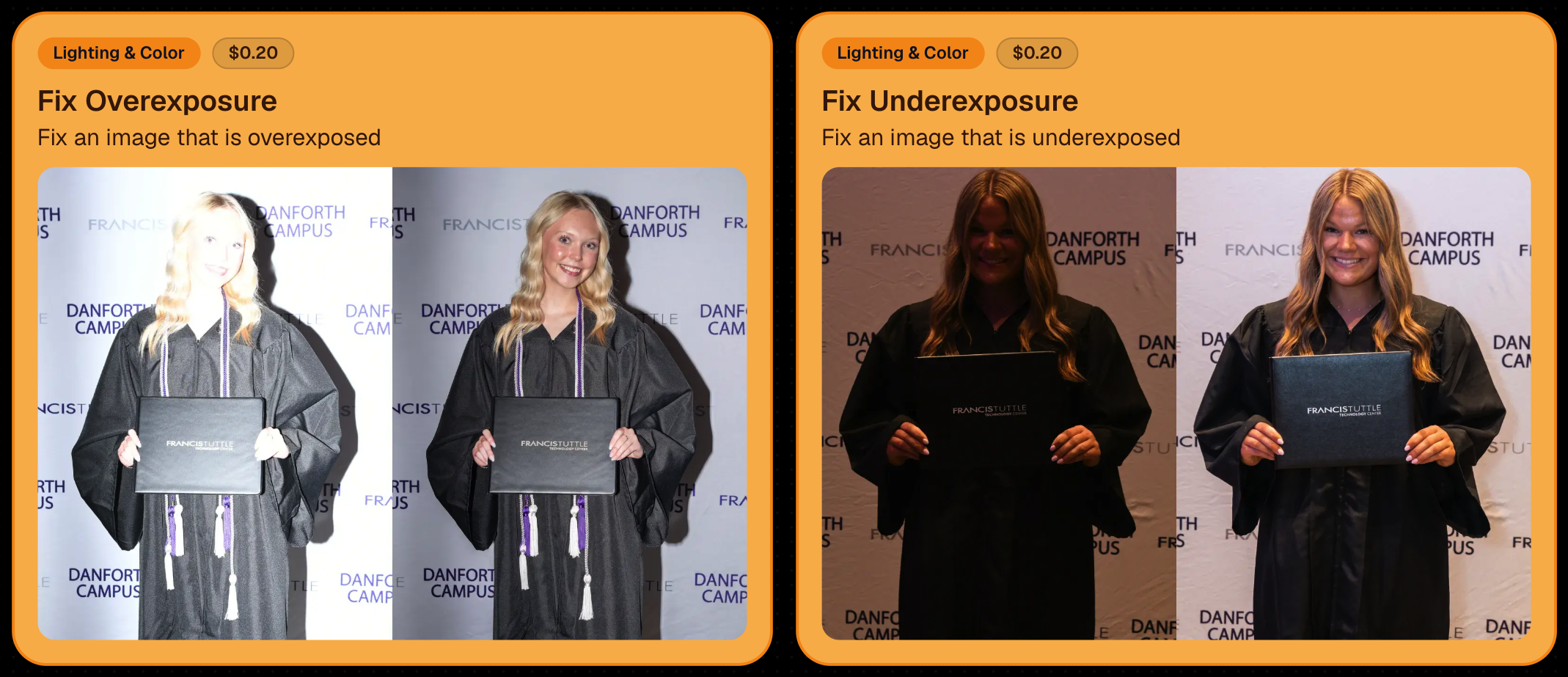
🌙 New Fix Underexposure node
☀️ Fix Overexposure greatly improved
⏳ New Jersey Jotter progress bar
This makes it much easier to tell whether recognition is still working through a large Event.
✨ Titled Luxe Prints now work with package prefill
🖼️ Titled Luxe Print package rendering fixed
🤖 AI-generated backgrounds now render correctly on products
🎨 Selected backgrounds now stay visible through the final product step
📝 Several product descriptions updated
👥 BGR versions of AI edits now keep direct participant assignments
📝 Package captions now display correctly
📸 Photo Booth fix for iPad
More Virtual Group control, a much stronger Background Removal workflow, some useful exposure tools, and plenty of fresh sports backgrounds to work with.
And if you still don’t like the backgrounds... now you’ve got plenty of ways to show us how it’s done. 😉
Keep creating magic,
Candy 🍬
If you’re a photographer looking to add NowCandid™ services to your wheelhouse, set up a call with us!
.svg)


What’s a Rich Text element?
The rich text element allows you to create and format headings, paragraphs, blockquotes, images, and video all in one place instead of having to add and format them individually. Just double-click and easily create content.
A rich text element can be used with static or dynamic content. For static content, just drop it into any page and begin editing. For dynamic content, add a rich text field to any collection and then connect a rich text element to that field in the settings panel. Voila!
Headings, paragraphs, blockquotes, figures, images, and figure captions can all be styled after a class is added to the rich text element using the "When inside of" nested selector system.
This is bold text
